Roots by Jaume Plensa | photo by Nadia Bouzid
ROOTS, 2014
Artist: Jaume Plensa
Location: Mori Building at Toranomon Hills, Tokyo, Japan
Painted stainless steel
1000 x 526 x 245 cm
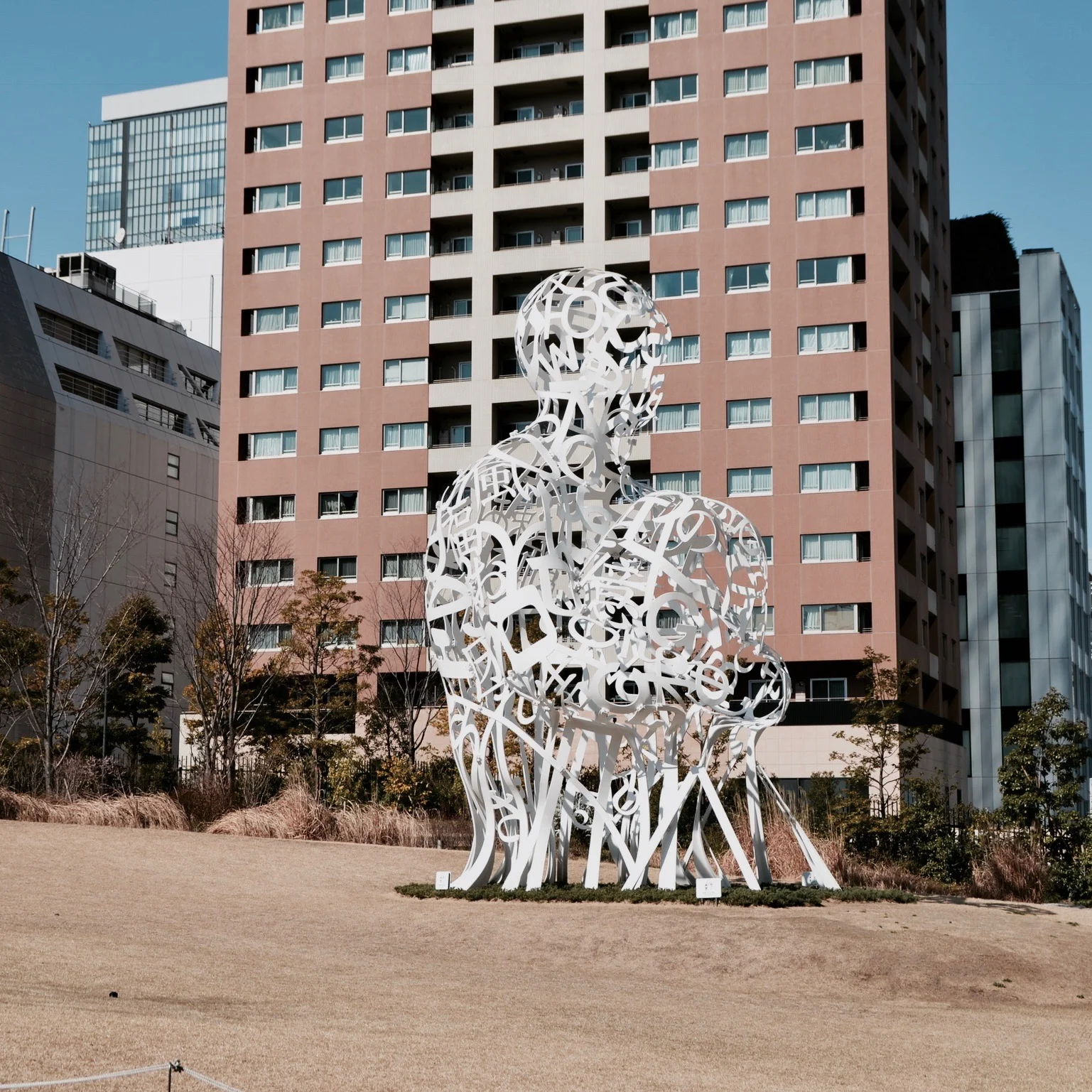
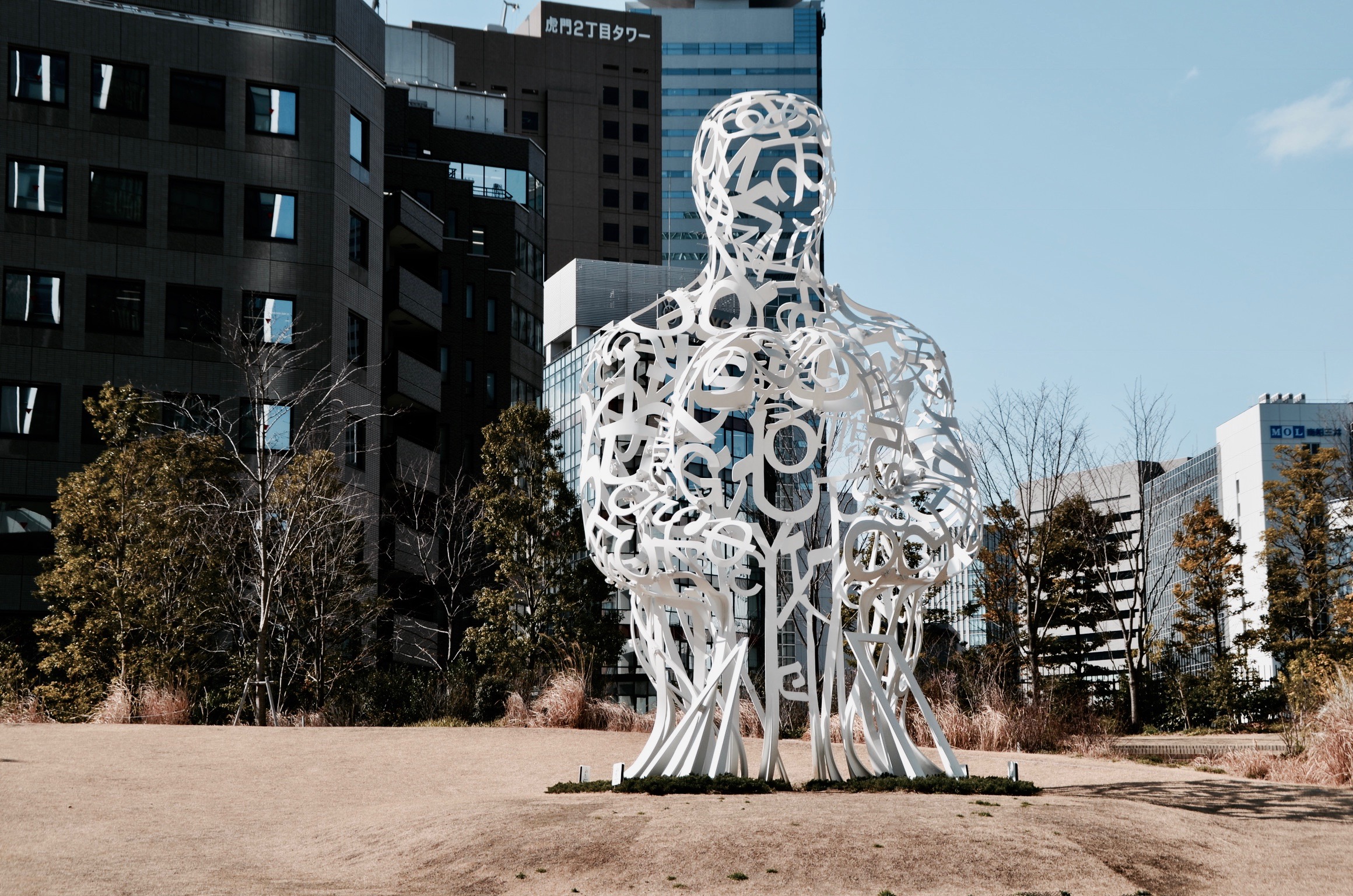
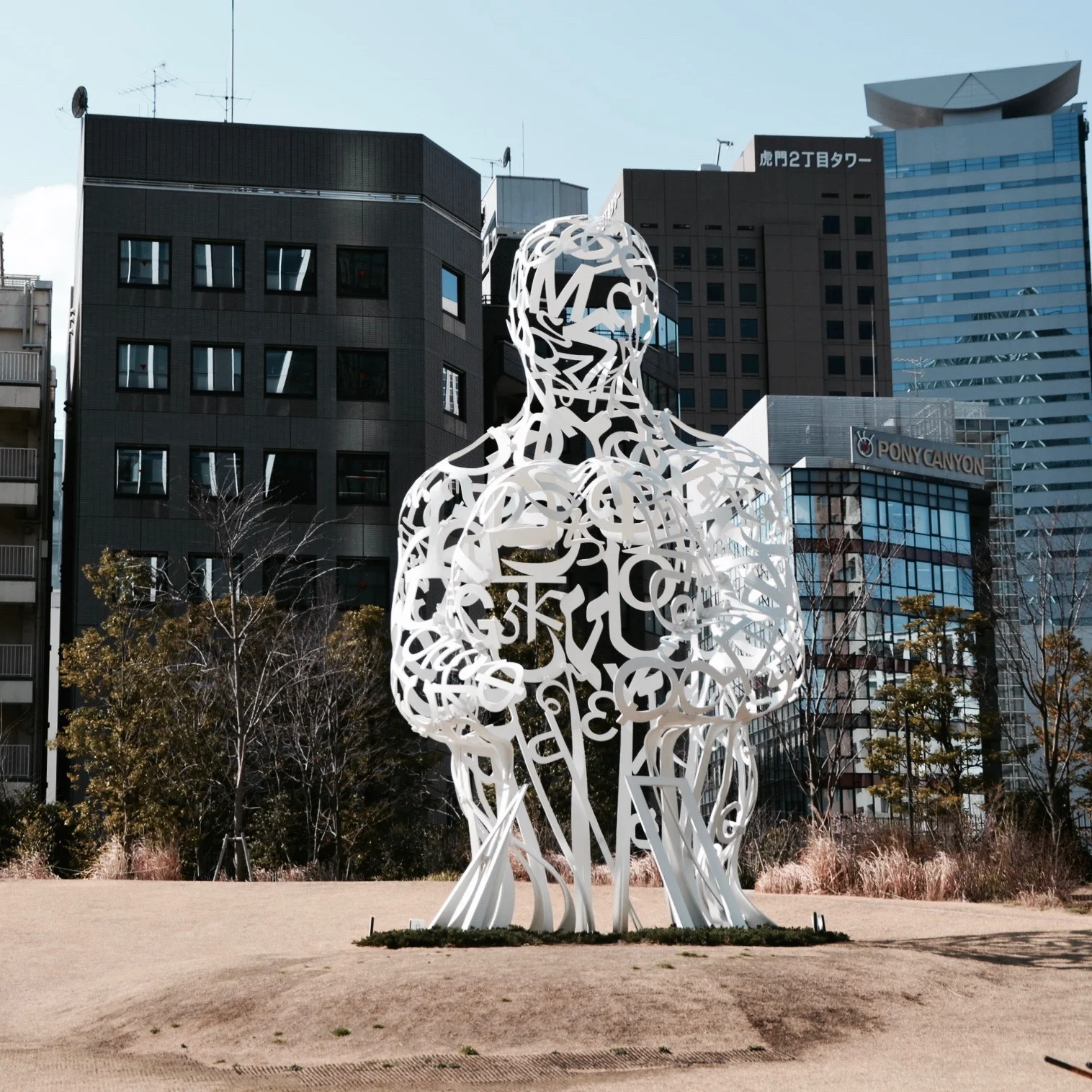
A white figure sits with its knees drawn toward its chest, its body assembled from letters and characters. Through the gaps, Tokyo’s buildings remain visible. Jaume Plensa’s Roots rises ten metres above the lawn at Toranomon Hills, large enough to hold its own against the surrounding architecture, yet open enough for the city to pass through its silhouette. Near the ground, the characters extend into long strands that give the sculpture its name.
Completed in 2014, the work combines characters drawn from eight writing systems in painted stainless steel. Plensa brings them together into a human form while preserving their individual shapes, an expression of coexistence that avoids making everyone identical. There is also an opening through which visitors can enter the sculpture. In an interview at its unveiling, he described wanting people to experience Tokyo through the letters, making the city itself part of the encounter.
Roots by Jaume Plensa | photo by Nadia Bouzid
Mori Building commissioned Roots for Oval Plaza, with supervision from the Mori Art Museum. Its setting belongs to an unusually intricate piece of real estate development. Toranomon Hills opened in June 2014 with offices, residences, shops, restaurants and the Andaz Tokyo hotel in a 52 storey tower. The project was developed together with the Toranomon section of Loop Road No. 2, using a multilevel system that allowed the road to pass beneath the building. The oval plaza occupies raised ground above the road, within a development that provided approximately 6,000 square metres of open space and greenery.
That engineering changes how the lawn around Roots reads. What appears to be an open garden beside a tower is part of a carefully constructed arrangement of infrastructure, buildings and pedestrian space. The sculpture gives that space a recognizable occupant and a reason to approach it. Its seated posture is particularly fitting in a project where so much effort went into accommodating movement.
The commission also expresses the developer’s ambitions for the district. At the unveiling, Mori linked the work’s cultural diversity to its plans for an international business community, attracting people and capital to Toranomon. Plensa’s interest was in creating a meeting place where people could pause and share space. Those intentions meet on this lawn, though they should be judged separately. The sculpture can invite a visitor to linger; whether the surrounding development becomes the international neighborhood its developer imagines will depend on the life that takes place around it.