Every old home in Miami comes with history, and a few rules you don’t see at showing.
In a Special Flood Hazard Area, the 50 percent rule measures the cost of improving a house against the accepted market value of the building itself, excluding the land. If the building is valued at $400,000, a $200,000 project reaches the threshold and can require the house to meet current floodplain standards. Before settling on a renovation budget, ask the local building department what value it will use and whether earlier work counts toward the total.

An older Miami house. Photograph by Nadia Bouzid.
Miami-Dade requires a warning in the sale contract when a home is in a Special Flood Hazard Area. It appears in bold print and tells the buyer that substantial work on a house below the required elevation may mean raising it. A careful buyer can read every word and still be no closer to knowing whether the renovation they have planned is possible at the price they expect.
The trouble starts with the value of the house. An older property in Miami may sell largely on the strength of its land, while the building on that land has a much lower value. The 50 percent rule measures improvements against the building’s accepted market value before work begins. It gives no credit for the price paid for the lot. If the building is valued at $400,000, a project costing $200,000 reaches the threshold, even if the buyer paid considerably more for the property.
The arithmetic is easier to follow with one house carried through it. Take a house in the City of Miami, inside Zone AE, with its lowest floor below the base flood elevation on the flood map. The Miami-Dade Property Appraiser puts the value of the structure at $400,000, land excluded, and the City accepts that building only figure. Half of $400,000 is $200,000, and that is the ceiling. Work that reaches $200,000 or passes it makes the project a substantial improvement, and the house must then meet the floodplain requirements written for new construction.
A first project can stay under the ceiling. The owner replaces the roof covering for $32,000, rebuilds the kitchen, cabinets, counters and appliances included, for $46,000, renovates two bathrooms for $31,500, replaces the air conditioning for $15,800, renews the electrical panel and part of the wiring for $11,200, lays new floors for $19,400, repairs drywall and repaints for $8,600, and pays $7,000 of contractor overhead and profit. The total is $171,500. That is 42.9 percent of the value of the structure, and it leaves $28,500 of room below the ceiling. Fees for the architect, the survey and the permits are not part of the total, because the federal desk reference leaves them out, and work outside the structure, a pool, landscaping or a driveway, is left out as well.
A second project, larger, crosses the ceiling. It keeps everything in the first project and adds the replacement of every window and the exterior doors for $26,400 and a rear addition holding a bedroom and a bathroom for $74,300, and the contractor overhead and profit rises to $12,800 across the whole job. The total is $278,000, which is 69.5 percent of the value of the structure and $78,000 past the ceiling. The crossing can also arrive in stages, because the City of Miami adds the cost of work together over a period of two years. The first project at $171,500 and the windows at $26,400 a year later come to $197,900, which leaves $2,100. Any further counted work inside the same two years takes the house over. Unincorporated Miami-Dade adds work over six months instead, and over five years inside a coastal high hazard area.
What follows the crossing is the part the renovation budget never shows. The flood map sets the base flood elevation for the lot at 8 feet, and the elevation certificate for this house puts its lowest floor at 5 feet. Compliance asks for the lowest floor at 9 feet, the base flood elevation plus one foot of freeboard, with the electrical, plumbing and air conditioning equipment raised to at least the same height. The house has to be lifted, or in the end rebuilt, to that height, and the owner meets that cost on top of the $278,000 of renovation that triggered it. A buyer who wants to keep an older house below the required elevation is really buying two projects, and only one of them appears in the contractor's price.
A project at or above that threshold is a substantial improvement. In a regulated flood area, the existing house must then meet the floodplain standards that apply to new construction. There are several flood zones within the Special Flood Hazard Area, including AE and VE. Zone X sits outside it and is not automatically subject to those same federal elevation requirements. A buyer still needs to check local building rules rather than treating a map designation as permission to do any work they please.
The $400,000 in that example cannot be guessed from a listing or the total value on a tax record. The City of Miami’s published policy allows the building only assessed value or a qualifying appraisal of the structure. The City reviews what is submitted and can reject a valuation it finds unrealistic. Coral Gables, Miami Beach and other municipalities administer their own requirements. Before making plans around a number, the buyer needs to know who will issue the permit and what that authority will accept.

A cream-colored brick house with a covered porch, white columns and a metal railing, surrounded by trees and shrubs. Photograph by Nadia Bouzid.
The renovation estimate needs the same discipline. A buyer may begin by talking about the kitchen and then decide to replace the roof, windows, plumbing and air conditioning. Labor counts, including work the owner performs or receives at a discount. Contractor overhead and profit, along with demolition associated with the project, may count as well. Work outside the building, such as landscaping or a pool, is generally treated differently. Certain costs for plans and permits may be excluded. In the City of Miami, the architect must certify that the construction contract accounts for the work shown on the plans. A quote that leaves out the inconvenient parts of the renovation will not establish what the renovation costs.
Nor does dividing the job into smaller permits necessarily solve it. The City of Miami counts improvements over two years. Unincorporated Miami-Dade generally uses six months, with a longer period in its defined coastal building zone. If a previous owner completed work within the applicable period, it may be counted with what the new buyer proposes. The deed can change hands without clearing that history. Work done outside the period, however, does not count forever.
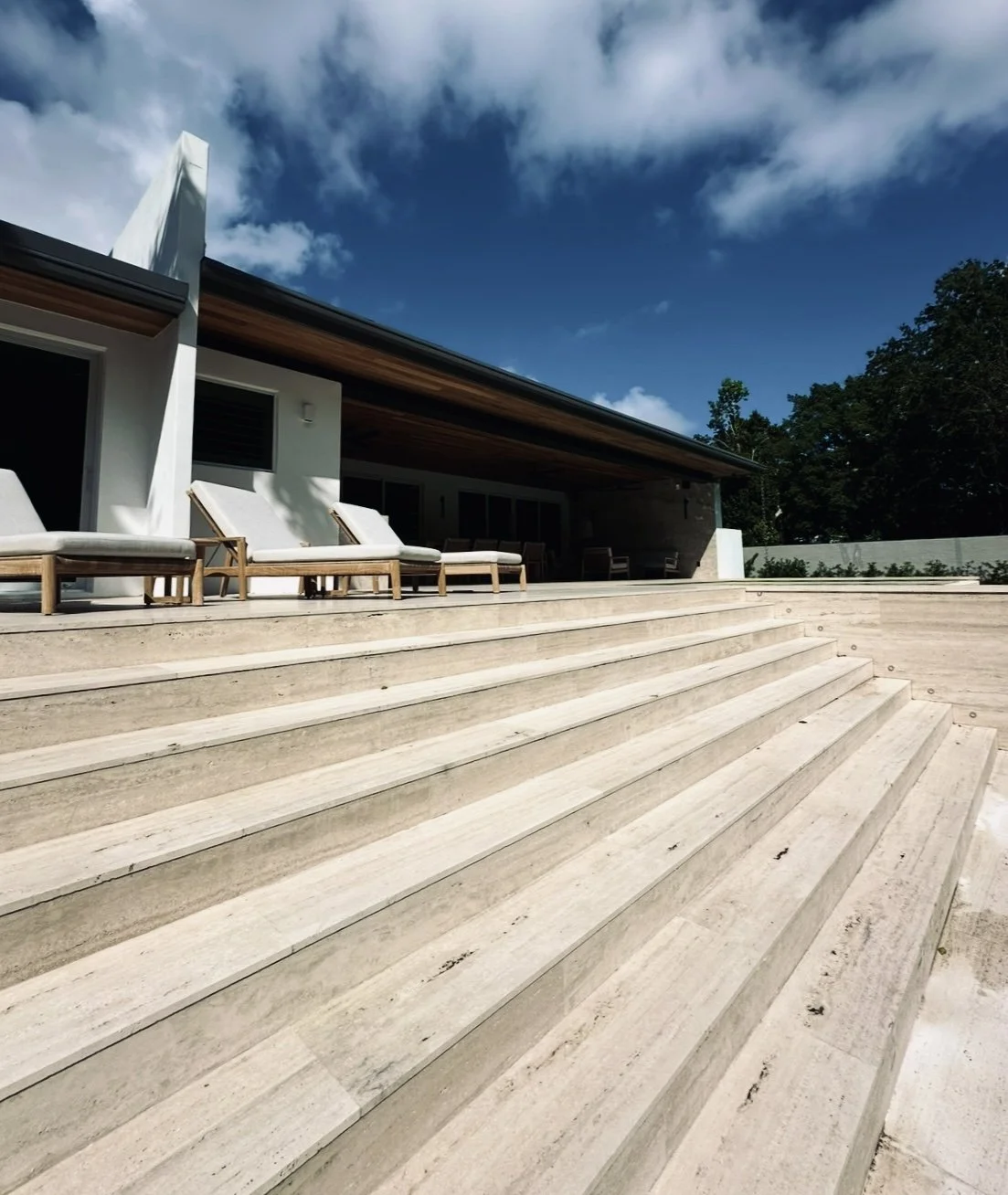
photo by Nadia Bouzid
Damage can bring a house under the rule even when no one intended to renovate it. If repairing damage from a storm, flood or fire costs at least half the building’s value before the damage, the house may have to meet current floodplain standards. The elevation certificate helps establish where the existing building stands in relation to the required flood elevation. It does not tell an owner what it will cost to bring that particular house into compliance.
None of this means that crossing 50 percent automatically requires demolition. An architect may find a workable way to elevate and adapt the existing house. In another building, the changes to the foundation, entrances, utilities and lower rooms may cost too much or strip away what the buyer wanted to keep. Rebuilding is sometimes the owner’s decision after those numbers and drawings are in hand. Treating it as the automatic result of the rule gives the buyer no help in judging the property.
That judgment belongs in the purchase, while the price and inspection period are still open. If keeping the existing house is central to the buyer’s plans, its elevation, permitted history and likely compliance work need to be priced before closing. If the buyer is really purchasing the land with plans to build, the old house calls for a different calculation. The bold paragraph in the contract warns both buyers about the same rule. Their decisions will have little else in common.
Every dream home in Miami comes with a fine print written in water.
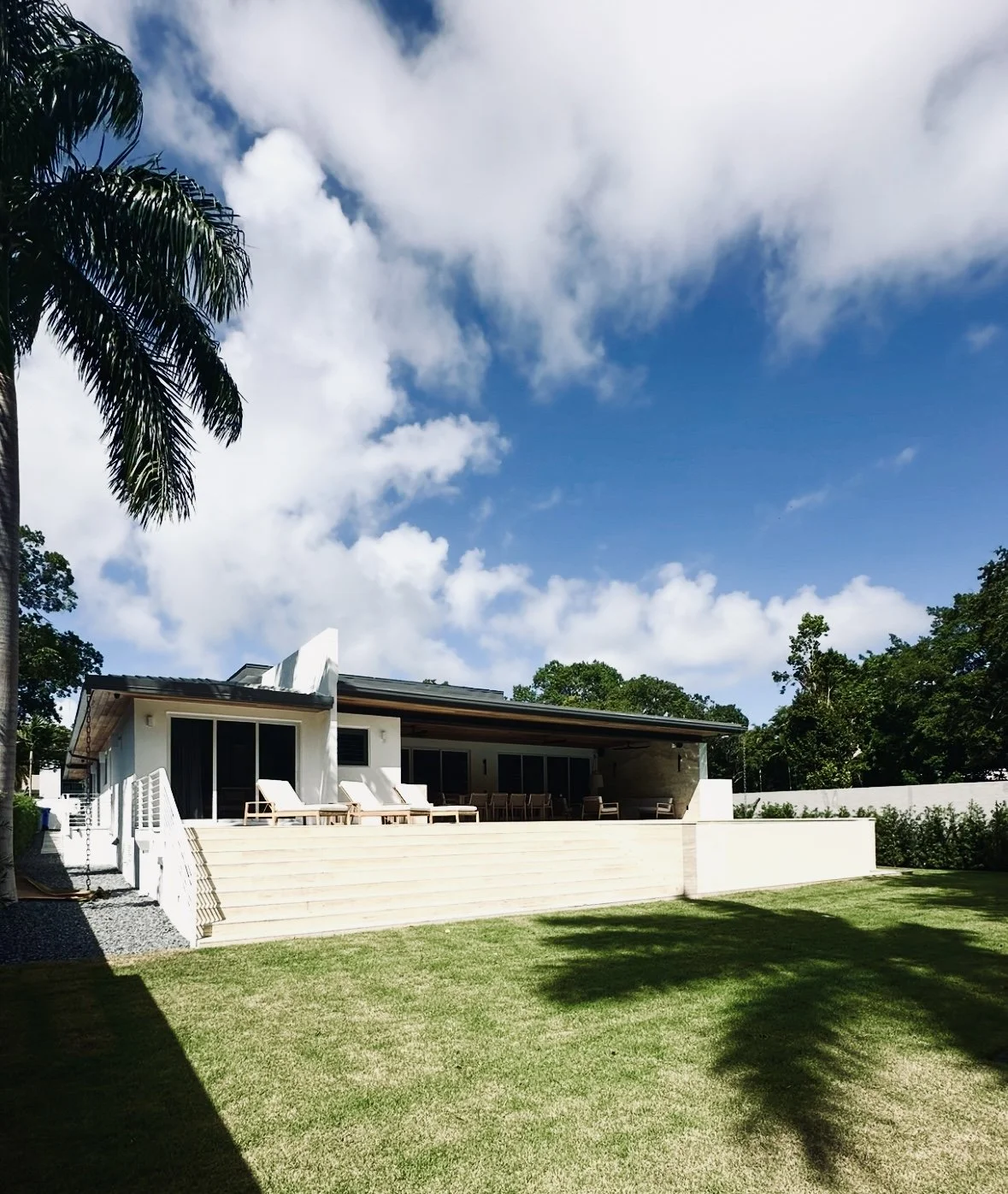
If you’re buying a single-family home in Miami-Dade, don’t just ask about the roof, the plumbing, or the age of the windows. Ask what happens when you try to improve it. Because in Miami, the real boundary between renovation and reconstruction isn’t imagination, it’s elevation -photo by Nadia Bouzid
Verified Sources
FEMA — Substantial Improvement / Substantial Damage Desk Reference (P-758)
FEMA — National Flood Insurance Program
FEMA — Flood Maps & Map Service Center
Miami-Dade County — Flood Protection & Elevation Certificates
Miami-Dade County — Flood Zone Information Portal (FIRM Maps)
Miami-Dade County — Floodplain Management Regulations – Chapter 11C
City of Miami — Planning & Zoning (Miami 21 Code)
City of Miami — Building Department Permitting Portal
Florida Division of Emergency Management — Floodplain Management
Florida Department of Environmental Protection — Coastal Construction Control Line Program
South Florida Water Management District — Regional Resources
FEMA — Flood Insurance Rate Maps (FIRMs)
Flood Factor — U.S. Flood Risk Assessment Tool
Citizens Property Insurance Corporation — Flood Coverage Information
U.S. Army Corps of Engineers — Sea Level Change Curves for South Florida
NOAA — Tides & Currents: Sea Level Trends for Miami
Frequently Asked Questions About Miami's 50 Percent Rule
Does the 50 percent rule apply to every home in Miami?
No. The rule primarily affects properties located within FEMA Special Flood Hazard Areas, including many homes in AE and VE flood zones. Properties in lower risk flood zones may not be subject to the same substantial improvement requirements, although local building codes and permitting rules still apply.
Does buying a home reset the 50 percent rule?
No. The rule follows the structure, not the owner. Purchasing the property does not create a new renovation allowance. Previous permitted improvements may still count toward the substantial improvement calculation, depending on local records and how the municipality administers the rule.
Does the 50 percent calculation include labor?
Yes. The calculation generally includes both materials and labor associated with the improvement. Roofing, electrical, plumbing, HVAC, flooring, drywall, built-in cabinetry, contractor overhead, and profit are typically included. Land value, landscaping, pools, driveways, and certain permit or design fees are generally excluded.
Can I renovate my house in phases to avoid the rule?
Not necessarily. Many municipalities track cumulative improvements over time. Splitting a renovation into multiple permits does not automatically avoid a substantial improvement determination. Before planning a phased renovation, consult your architect, contractor, and local building department.
Questions Every Buyer Should Ask Before Purchasing an Older Home in a Flood Zone
Before closing on an older home in Miami-Dade, ask more than whether the roof or plumbing has been updated.
Ask:
What is the county's current structure value?
Is the property located in an AE or VE flood zone?
Is there an elevation certificate available?
Have there been previous permitted renovations?
Have any substantial improvement calculations already been performed?
Can an architect prepare a substantial improvement analysis before closing?
How would the renovation affect future flood insurance premiums?
Those answers often matter more than the finishes inside the house.
Why the 50 Percent Rule Matters Even If You Aren't Planning a Major Renovation
Many buyers assume the rule only affects people planning a complete remodel.
It can influence resale value, insurance costs, financing, and even which buyers will consider the property in the future. A home that appears to be an affordable renovation project may become financially impractical once substantial improvement requirements are triggered.
Understanding the rule before making an offer can prevent expensive surprises after closing.