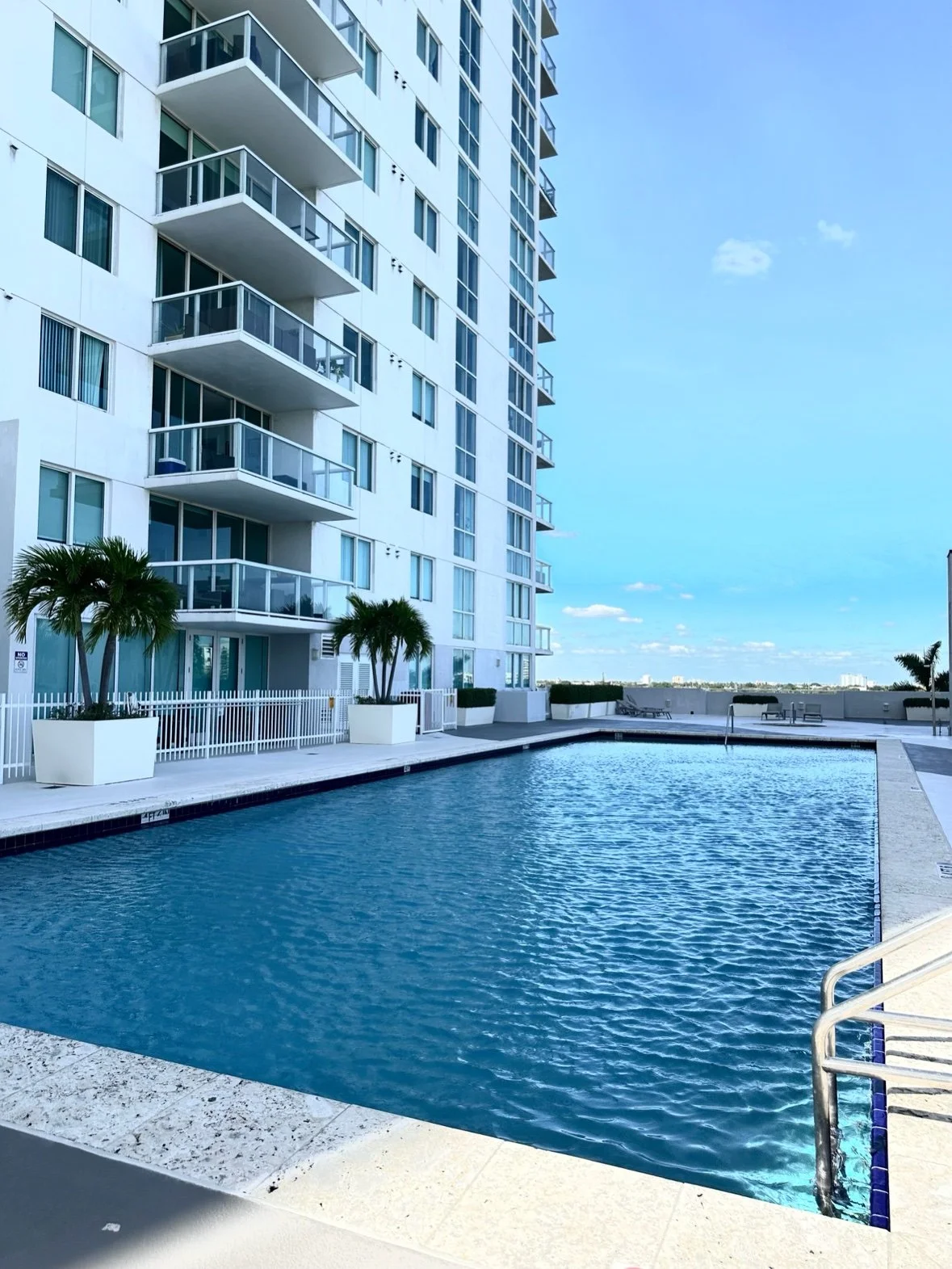
Photo by Nadia Bouzid. A Miami condominium tower above its pool deck.
December 31, 2026 is the date the extensions end. By that date, every Florida condominium association with a building of three habitable stories or more must have completed a structural integrity reserve study, and the budget that follows the study must fund the reserves the study sets for the structural components of the building. The requirement reaches the monthly assessment of every owner in the building, and it is enforced by the same lien that secures every other assessment the association levies.
The study is an examination of the parts of the building whose failure carries the greatest cost and the greatest risk. It covers the roof, the structure, fire protection, plumbing, electrical systems, waterproofing and exterior doors and windows. For each component it estimates the remaining useful life and the cost of repair or replacement, and from those estimates it produces the funding schedule the association is required to follow. The study repeats at least every 10 years, so the schedule is renewed against the condition of the building as it ages.
The funding rule is the part that changes behavior. For the structural items on the study list, the owners can no longer vote to waive the reserves or to fund less than the study requires. Reserves must also be kept for the roof, exterior painting, paving and any deferred maintenance or capital expenditure item above $25,000. Before this regime, an association could vote its reserves down year after year, and many older buildings did exactly that, holding the monthly fee steady while the roof, the concrete and the waterproofing aged on schedule. The cost did not disappear. It accumulated, and it now arrives through the study.

Photo by Nadia Bouzid. The lobby of a Miami condominium.
The first studies were due from the buildings that existed before July 2022 by the end of 2025. House Bill 913, enacted in 2025, extended the initial study deadline for certain associations to December 31, 2025, raised the threshold for reserve items from $10,000 to $25,000, and gave qualifying associations additional ways to fund reserves and major repairs. The same law allows certain associations, with the approval of a majority of all voting interests and under limited conditions, to pause or reduce reserve contributions for no more than two consecutive annual budgets where the money is directed to repairs recommended by a milestone inspection. None of those adjustments moved the outer date. December 31, 2026 is the last date in the statute, and no association may complete its first study later.
A separate law runs beside the study. The milestone inspection examines the structure of a building when it reaches 30 years of age and every 10 years after that, and the local enforcement agency may require the first inspection at 25 years where conditions such as exposure to salt water justify it. The inspection establishes the condition of the structure. The study prices the work that condition requires, and the reserve schedule collects the money in advance, month by month, instead of in a single assessment when the work can no longer wait.
Completion carries a reporting step. Within 45 days after the study is completed, the association must report it to the Department of Business and Professional Regulation. The study also enters every sale in the building. A seller who is not the developer must give the buyer the most recent structural integrity reserve study or a statement that none has been completed, as part of the disclosure package the buyer receives before the cancellation window begins to run. A building that has no study to hand over after the deadline is telling the buyer something the statute intended the buyer to know.
In the older towers along Brickell Avenue and the beach, the study and the milestone inspection together are now the largest single force acting on monthly assessments. The amounts are secured the way all assessments are secured. The association holds a lien on each unit, effective from the recording of the original declaration, and it can foreclose that lien the way a mortgage is foreclosed, and a buyer is jointly liable with the seller for unpaid assessments that came due before the transfer. For a buyer, the questions after December 31, 2026 are documentary. Has the study been completed, and has it been reported? What does the funding schedule require each owner to pay each month? The answers sit in the official records of the association, open to inspection by any member on written request.