This Moorish Revival home with Jerusalem stone floors and antique stained glass windows, sits tight in Coconut Grove
Property Facts
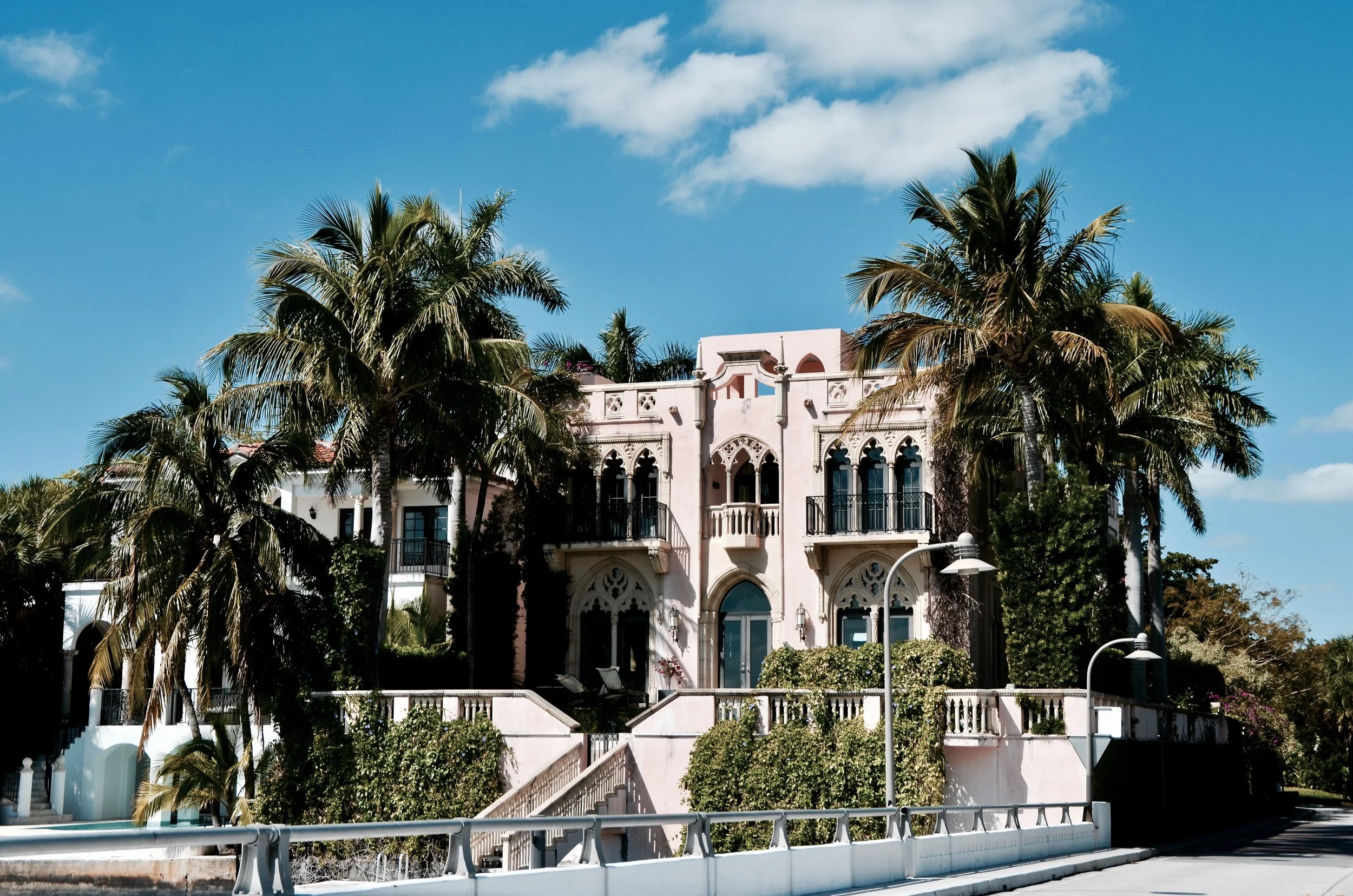
📍1840 S Bayshore Ln, Miami, FL 33133 Coconut Grove | photo by Nadia Bouzid
Location: South Bayshore Lane, Coconut Grove
Style: Moorish Revival
Bedrooms: 5
Bathrooms: 5 Full | 2 Half
Year Completed: 2009
Adjusted Living Area: 9,947 SF
Actual Area: 13,543 SF
Lot Size: 11,851 SF
Sale Price (2016): $5,936,000
Price Per Adjusted SF: Approximately $597/SF
When people think about Miami architecture, they usually think of Art Deco in South Beach or the contemporary glass houses that now line so much of the waterfront. The city has always been more complicated than that. Mediterranean Revival arrived through Coral Gables. MiMo defined an optimistic postwar Miami. Tropical modernism responded to the climate rather than fighting it. More recently, minimalist architecture has become almost synonymous with luxury construction. Miami has never developed a single architectural identity. Instead, it has collected influences from around the world and made them its own.
That is one of the reasons this house has stayed with me for so many years.
Located on South Bayshore Lane on the way toward Grove Isle, the residence doesn't immediately feel like something you expect to find in Coconut Grove. It draws heavily from the Moorish Revival tradition, borrowing architectural language that traces back through North Africa and Islamic Spain. Horseshoe arches, Jerusalem stone floors, antique stained glass, carved detailing, and soaring vaulted ceilings create a house that feels almost transported from another place. It clashes with its surroundings, yet somehow it blends into Coconut Grove remarkably well. Perhaps that's because the Grove has always welcomed architectural individuality more than almost any other neighborhood in Miami.
What I find most interesting isn't whether someone likes this style of architecture. I don't naturally gravitate toward it myself. Taste is personal, and houses like this often divide opinion. What interests me is the conviction behind it. Every material, every proportion, and every detail appears to belong to the same architectural idea. It isn't trying to borrow a few decorative elements from another style. It fully embraces one vision, and that has become increasingly uncommon in luxury residential construction.
Architecture, much like art, doesn't have to become your favorite before it earns your attention. Some buildings stay with you because they're beautiful. Others stay with you because they're unusual enough to interrupt your expectations. This house has always done the latter for me. Whenever I happen to find myself riding toward Grove Isle, I still catch myself looking at it, wondering how something that feels so different from the prevailing architecture of Miami can also feel perfectly comfortable where it is.
The location plays an important role in that story. Waterfront parcels in Coconut Grove have always been among the city's most desirable pieces of land, and opportunities to build on them become increasingly rare with each passing year. Unlike new condominium towers that can continue rising throughout the city, waterfront lots are finite. Buyers searching for these locations are often purchasing something that cannot be recreated, regardless of the house that happens to sit on it today.
Completed in 2009, the residence offers approximately 9,947 square feet of adjusted living area across three levels on an 11,851 square foot lot. According to Miami-Dade County property records, it sold in 2016 for $5,936,000, which equates to approximately $597 per adjusted square foot. Those numbers help document the property's history, but they don't explain why the house continues to occupy space in my memory years later.
Some buildings become memorable because they define a city. Others become memorable because they quietly refuse to look like anything else around them. I think this house belongs in the second category.


Miami's Architectural Styles
One of the things that makes Miami so visually interesting is that it never developed a single architectural identity. Unlike cities that can be defined by one dominant style, Miami grew through different periods of immigration, development, and cultural influence. The result is a city where buildings from completely different architectural traditions often share the same neighborhood.
Some of the most recognizable architectural styles found throughout Miami include:
Art Deco
Found primarily in South Beach, Art Deco became synonymous with Miami during the 1930s and remains one of the city's most recognizable architectural movements. Rounded corners, porthole windows, terrazzo floors, pastel colors, and geometric ornament define many of these historic buildings.
Mediterranean Revival
Popularized during Florida's land boom of the 1920s, Mediterranean Revival architecture drew inspiration from Spain and Italy. Stucco walls, red clay tile roofs, courtyards, balconies, and arched openings continue to define neighborhoods such as Coral Gables and parts of Coconut Grove.
Moorish Revival
Far less common in Miami, Moorish Revival architecture borrows from Islamic architecture in Spain and North Africa. Horseshoe arches, decorative tile work, carved wood, stained glass, domes, and intricate geometric detailing create buildings that feel dramatically different from contemporary construction. The residence featured in this article is one of the more unusual private examples of this style in Miami.
MiMo (Miami Modern)
Emerging after World War II, MiMo embraced optimism, automobiles, and South Florida's subtropical climate. Hotels and apartment buildings along Biscayne Boulevard introduced playful rooflines, breeze blocks, open-air lobbies, and dramatic signage that continue to influence Miami design today.
Contemporary Tropical Architecture
Many of today's luxury waterfront homes follow a contemporary language built around natural light, indoor-outdoor living, large expanses of glass, deep overhangs, and materials designed to respond to South Florida's climate. This has become one of the defining architectural styles of modern Miami.
Miami's architecture has always reflected the city's willingness to borrow ideas from elsewhere. Rather than following one tradition, it has assembled influences from Europe, Latin America, the Caribbean, and the Middle East into a city that rarely looks the same from one neighborhood to the next.