450 huge ants 🐜🐜🐜 invade Saatchi Gallery with an installation by Colombian artist Raphael Gomezbarros
🐜🐜🐜🐜🐜🐜🐜🐜🐜🐜🐜🐜
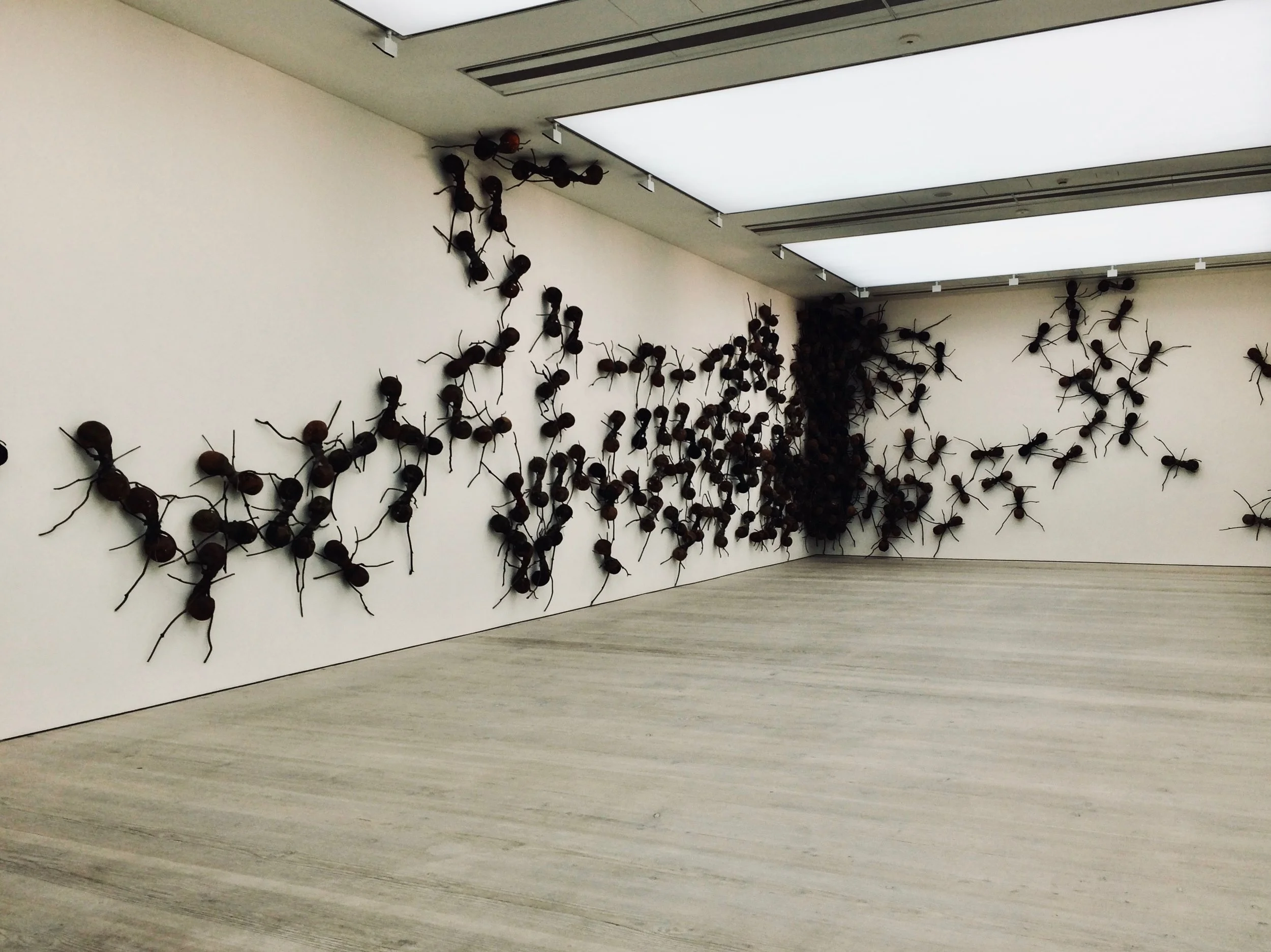
Casa Tomada' (2013) by Rafael Gómezbarros | photo by Nadia Bouzid
Artist: Rafael Gómezbarros
Nationality: Colombian, born in Santa Marta
Installation name: Casa Tomada || House Taken
2013
Materials used: Resin, Fiber Glass, Madera, Screen Cotton, Cuerda Arenas, Cerrejón Coal
Body: 50 x 20 x 50; Legs 90 x 50 cms
450 ANTS
Some works ask to be admired. Others ask to be understood.
The first time I saw Casa Tomada by Colombian artist Rafael Gómezbarros at the Saatchi Gallery in London, I wasn't thinking about Colombia, contemporary art, or even the artist himself. I was trying to understand why hundreds of giant ants covering an entire gallery wall felt so unsettling. They weren't displayed like individual sculptures waiting to be admired. Together they transformed the room, making the architecture itself feel different. Before I read the title or the wall text, the installation had already done its job.

Casa Tomada' (2013) by Rafael Gómezbarros | photo by Nadia Bouzid
For reasons I couldn't explain at the time, my mind immediately went to Franz Kafka. Not because the work illustrates The Metamorphosis. It doesn't. What it reminded me of was the quiet discomfort that runs through Kafka's writing, where something ordinary shifts just enough to make the familiar feel strange. It wasn't the ants themselves that stayed with me. It was the multiplication of them, the repetition, and the strange feeling that they had quietly taken over the space without anyone trying to stop them.
Only afterwards did I read about the installation.
Created in 2013, Casa Tomada was Gómezbarros' response to Colombia's decades of internal armed conflict and the displacement of millions of people forced to leave their homes. According to the Saatchi Gallery, the ants were constructed using casts of human skulls and were conceived as a tribute to those who disappeared into the background of history despite the scale of their loss. The title references Julio Cortázar's short story Casa Tomada, where an invisible presence slowly occupies a house until its inhabitants quietly abandon it.
Knowing that context changed my understanding of the work, but it didn't replace my first reaction. If anything, it explained why the installation had already felt so unsettling before I knew what it meant. Gómezbarros wasn't asking me to look at hundreds of sculptures. He was asking me to experience what happens when an entire space is transformed by an invisible human story.
Looking back, I think that's what has stayed with me. I don't remember the installation because of its scale, or because I can still recall the museum's interpretation. I remember it because it changed the relationship between the artwork and the building. The walls stopped behaving like a neutral backdrop and became part of the installation itself. The gallery wasn't simply displaying the work. It had become part of the work.
I've forgotten the titles of paintings I've seen in far more famous museums. I haven't forgotten Casa Tomada. The older I get, the more I think memorable art rarely gives us answers. It changes the way we notice something ordinary, and years later we realize we're still carrying it with us.

Casa Tomada' (2013) by Rafael Gómezbarros | photo by Nadia Bouzid

Casa Tomada' (2013) by Rafael Gómezbarros | photo by Nadia Bouzid
About the artwork
Casa Tomada (House Taken) is a 2013 installation by Colombian artist Rafael Gómezbarros. The work was exhibited at the Saatchi Gallery as part of Pangaea: New Art from Africa and Latin America.
According to the Saatchi Gallery, the installation references Colombia's history of internal displacement and takes its title from Julio Cortázar's short story Casa Tomada.