Yayoi Kusama's furniture is really hard to find…
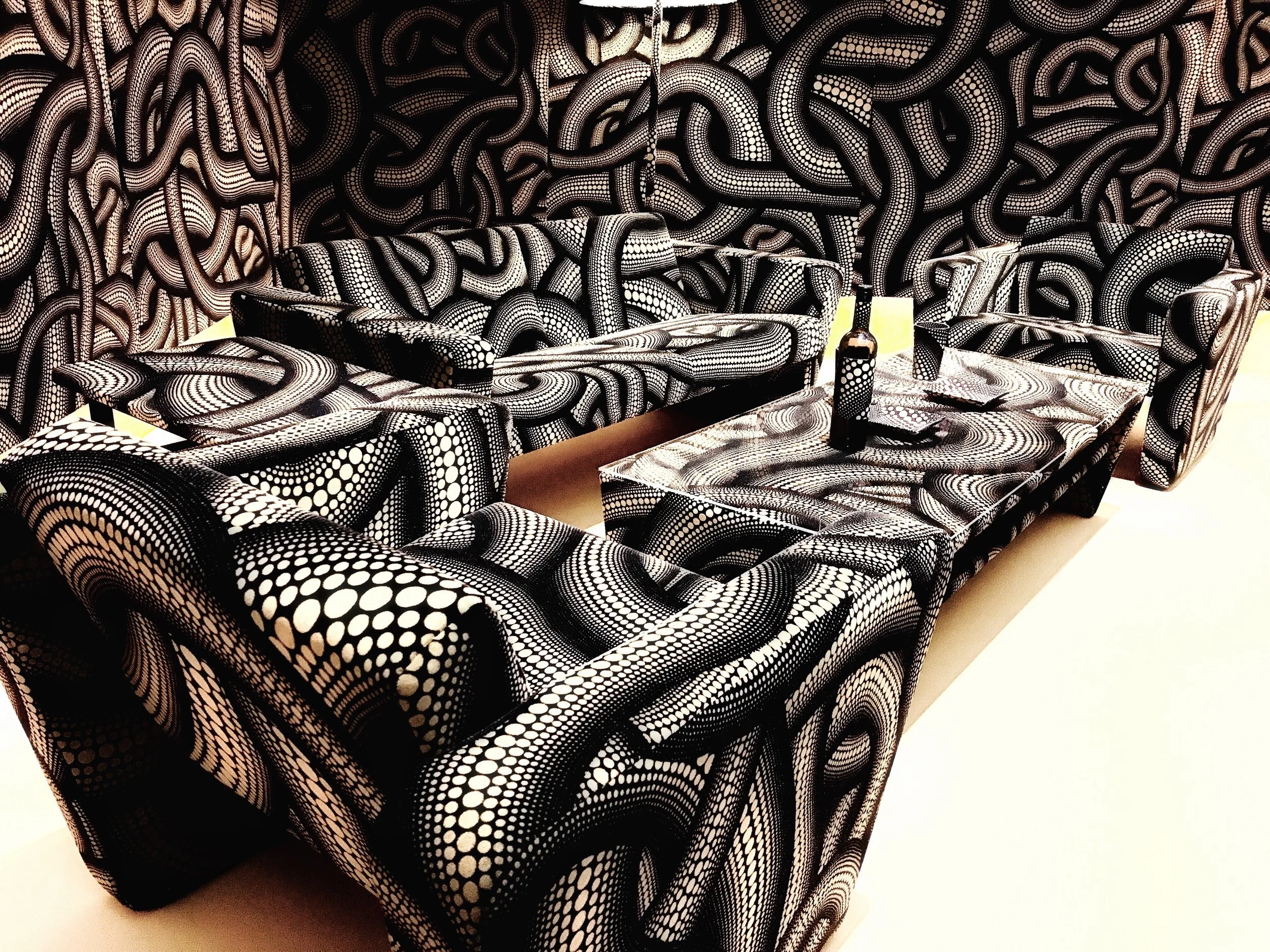
Photo by Nadia Bouzid | Yellow Tree/ Living Room 2017
Yayoi Kusama Furniture by graf | Decorative Mode no.3
Artist: Yayoi Kusama
Furniture collaborator: graf, Osaka
Installation: YELLOW TREE Living Room
First presented: 2002
Furniture collection released: 2003
Publisher: Seigensha Art Publishing
Exhibition photographed: Yayoi Kusama: My Eternal Soul
Location: The National Art Center, Tokyo
Exhibition year: 2017
In 2002, Yayoi Kusama made a furniture collection with graf, a creative group from Osaka. There were sofas, a coffee table and apparently a floor lamp, all covered in the black and yellow pattern from her Yellow Tree painting.
It looked like a living room that had been completely taken over by Kusama. The pattern moved from the sofa to the cushions, across the table and onto the walls. After a minute, the individual pieces almost disappeared.
The collection was first presented as YELLOW TREE Living Room at graf media gm in Osaka. Graf worked across furniture, interiors, architecture and product design, so this was a proper furniture collaboration. The sofas had normal proportions. The table was clean and usable. It was the fabric that made the room slightly mad.
A book came out the following year. YAYOI KUSAMA Furniture by graf: decorative mode no.3 was published by Seigensha in 2003 and ran 136 pages. It included the furniture, textiles and some of Kusama’s earlier work in fashion and film.
The book is still around, although finding a copy is not particularly easy. Finding the actual furniture is worse.
There is no obvious original price list online. I could not find production numbers or a complete retail catalogue. I could not confirm how widely the collection was sold, whether it ever reached stores outside Japan or where the pieces ended up. Even the exact number of designs is unclear. The photographs consistently show two sofa sizes and a coffee table. A floor lamp appears in other images, but the original catalogue is not available online to settle the matter.

photo by Nadia Bouzid
This is strange because Kusama has never had a problem entering the commercial world. Her work has appeared on dresses, handbags, shoes, perfume bottles, shop windows and Louis Vuitton trunks. Almost everything bearing her dots eventually turns up at auction or on the resale market. The graf furniture has remained oddly hidden.
Kusama had used furniture before. In 1990, she made Dressing Table, a dresser and chair wrapped in red fabric with white dots. It is a much stranger object. The pattern covers the mirror, the seat and every part of the dresser until the furniture starts to look unusable. The work belongs to the Sogetsu Foundation and is deposited at the Museum of Contemporary Art Tokyo.
The graf pieces were different. They still looked like furniture. You could sit on the sofa, put a drink on the table and technically live with them. The harder question is what else you could possibly put in the room.
A sofa like that does not politely join an interior. It runs it. The rug, curtains, lighting and everything on the walls would have to work around it. There would be no buying it first and figuring out the rest later.
The collection reappeared in 2017 as part of Yayoi Kusama: My Eternal Soul at The National Art Center in Tokyo. The exhibition was enormous, with 132 paintings from her My Eternal Soul series and around 80 earlier works covering more than seventy years of her career.
There were mirrored rooms, sculptures, early drawings and trees outside the museum wrapped in her red and white dots. By then, Kusama was one of the most recognizable artists in the world. Yet the furniture she had made fifteen years earlier still felt obscure.
That is what makes the collection worth looking at again. It was not a vague side project or a sofa covered in novelty fabric. Kusama worked with an actual furniture studio, created a full room, released a collection and published a book about it. Then most of it seems to have disappeared.
For an artist whose work ended up everywhere, her furniture is remarkably hard to find.
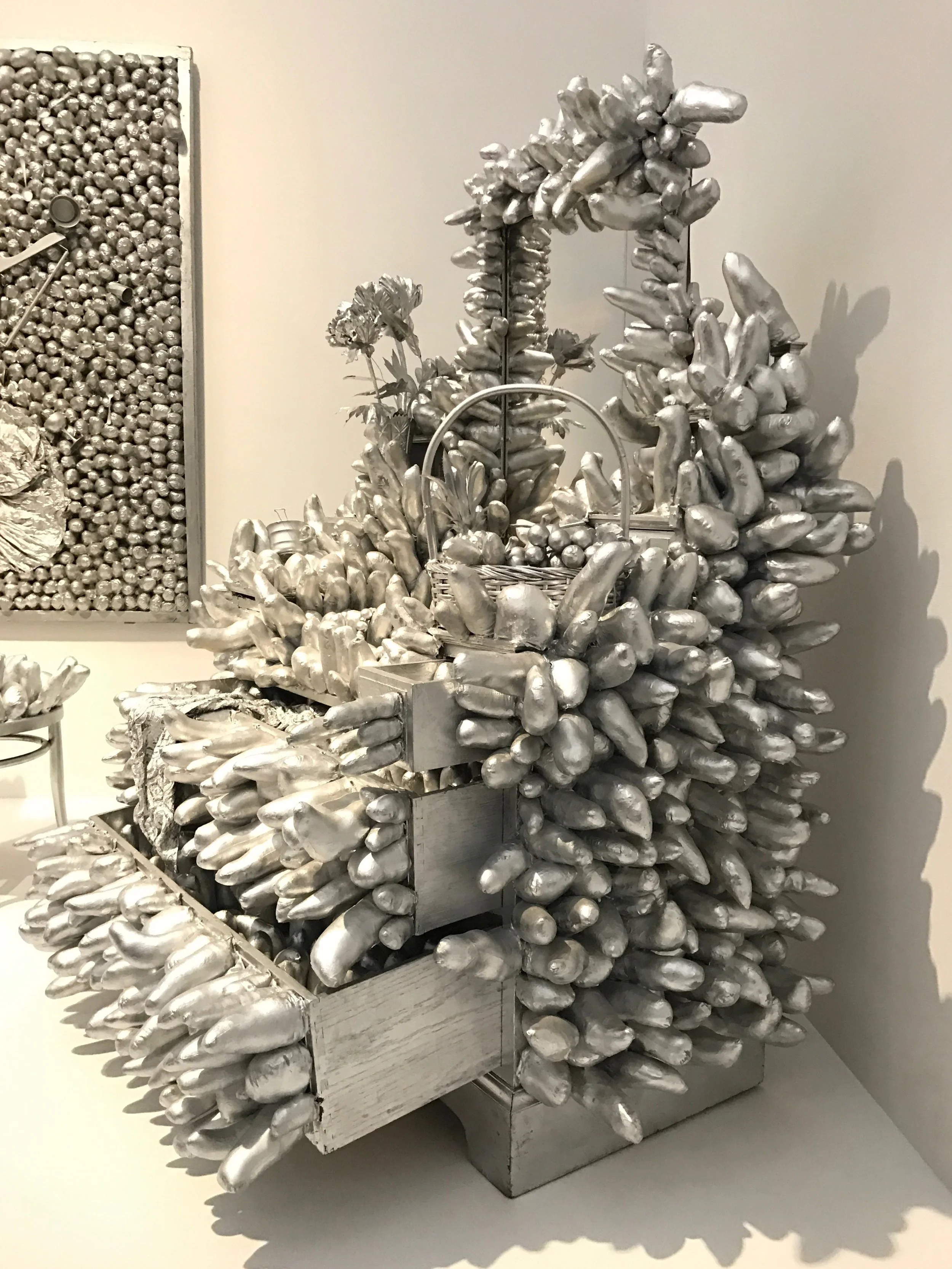
Photo by Nadia Bouzid
Dressing Table, 1990
Mixed media, 185×142×110cm (dresser), 94.5×46×56cm(Chair)
Sogetsu Foundation (deposited at Museum of Contemporary Art Tokyo)
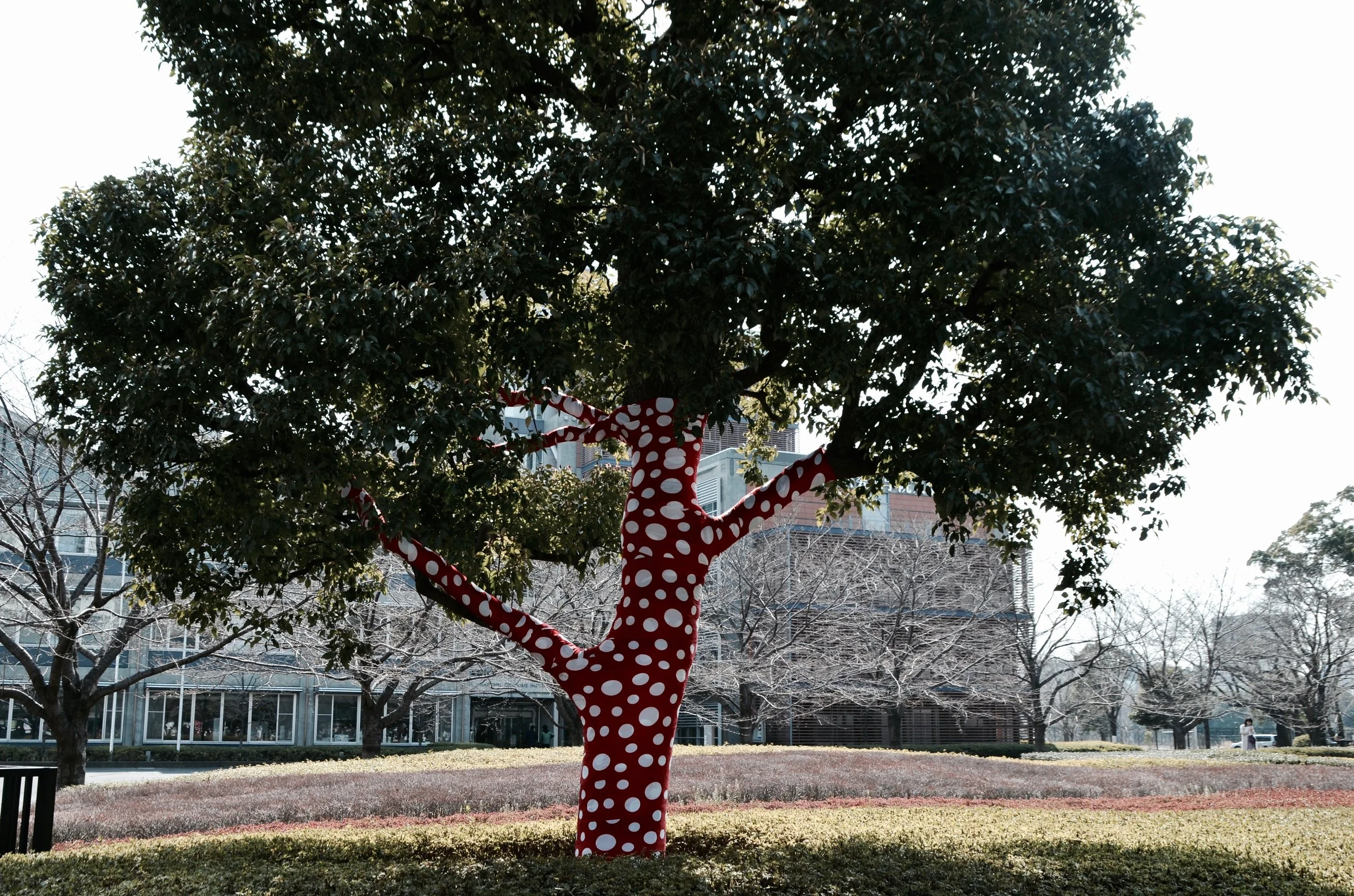
Yayoied Wrapped Tree
photo by Nadia Bouzid