Flagler on the River
Project Snapshot
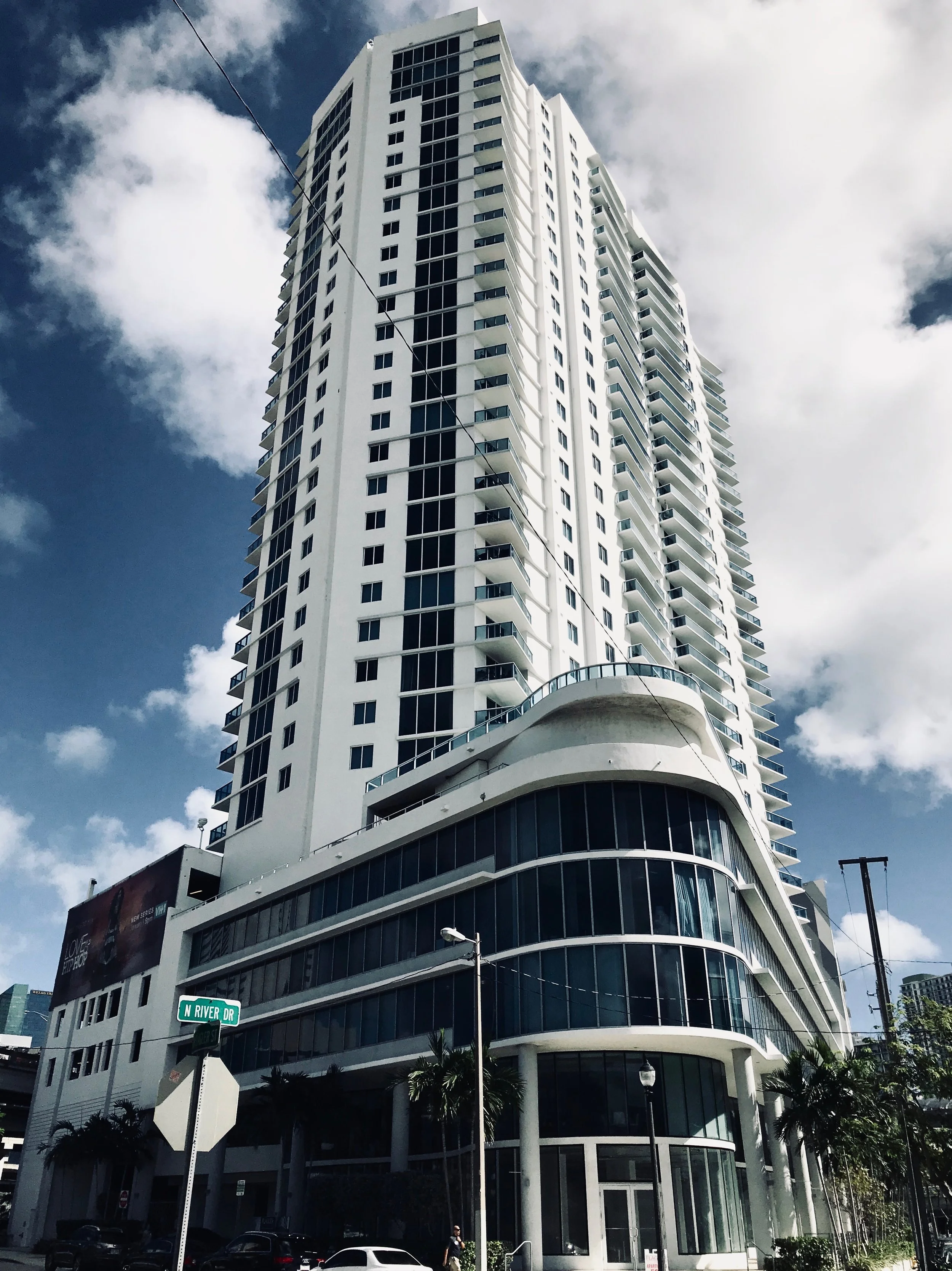
Flagler on the River | 340 W FLAGLER ST | Date 2018
Address: 340 West Flagler Street, Miami, Florida 33130
Location: where Downtown, Overtown, and the Miami River converge
Developer: Melo Contractors Corp.
Architect: Melo Architecture
Structural Engineer: De Los Reyes Engineering Inc.
Completed: June 2014
Stories: 32
Residential Units: 250 rental apartments
Building Area: 551,392 square feet
Site Area: 1.11 acres
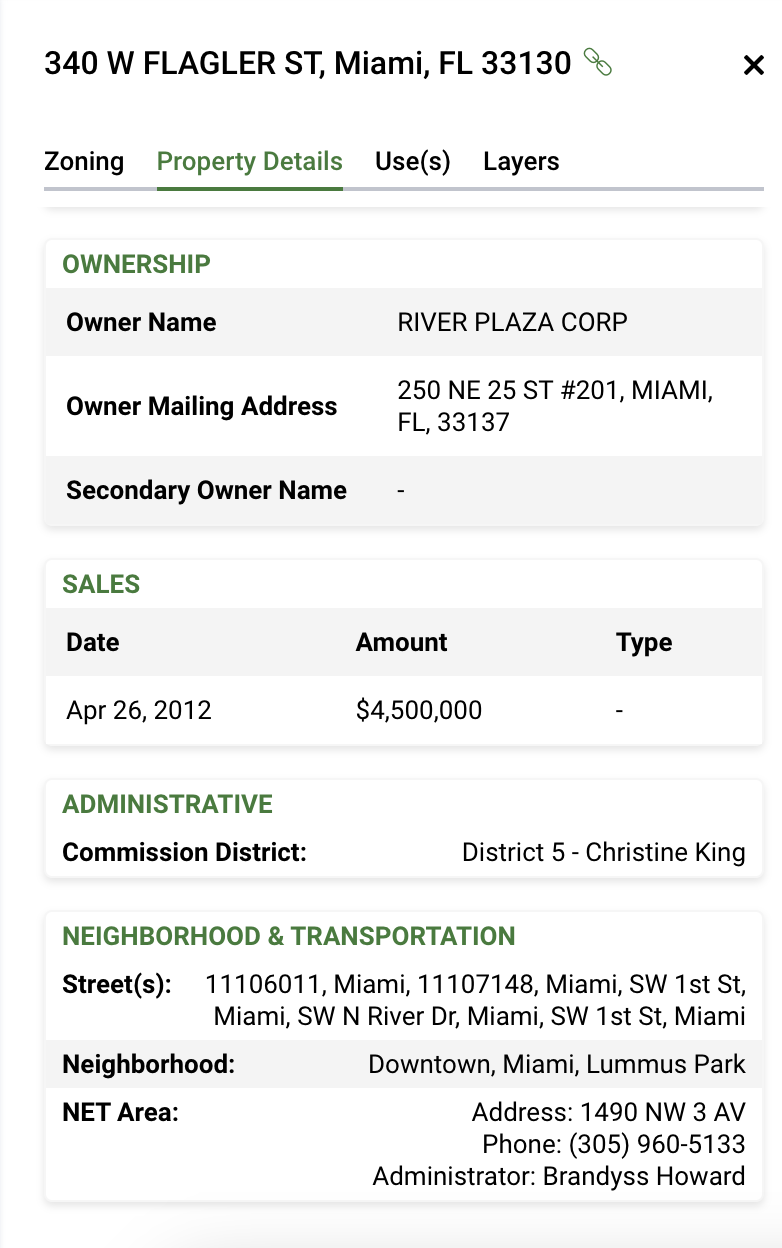
Land Acquisition: April 26, 2012
Recorded Purchase Price: $4,500,000
350 W Flagler St, Miami, FL 33130
It's remarkably easy to feel informed these days. A few headlines from The Real Deal. A story in Commercial Observer. A LinkedIn post. An Instagram carousel. Within ten minutes, it feels as though you've caught up on everything happening in Miami real estate.
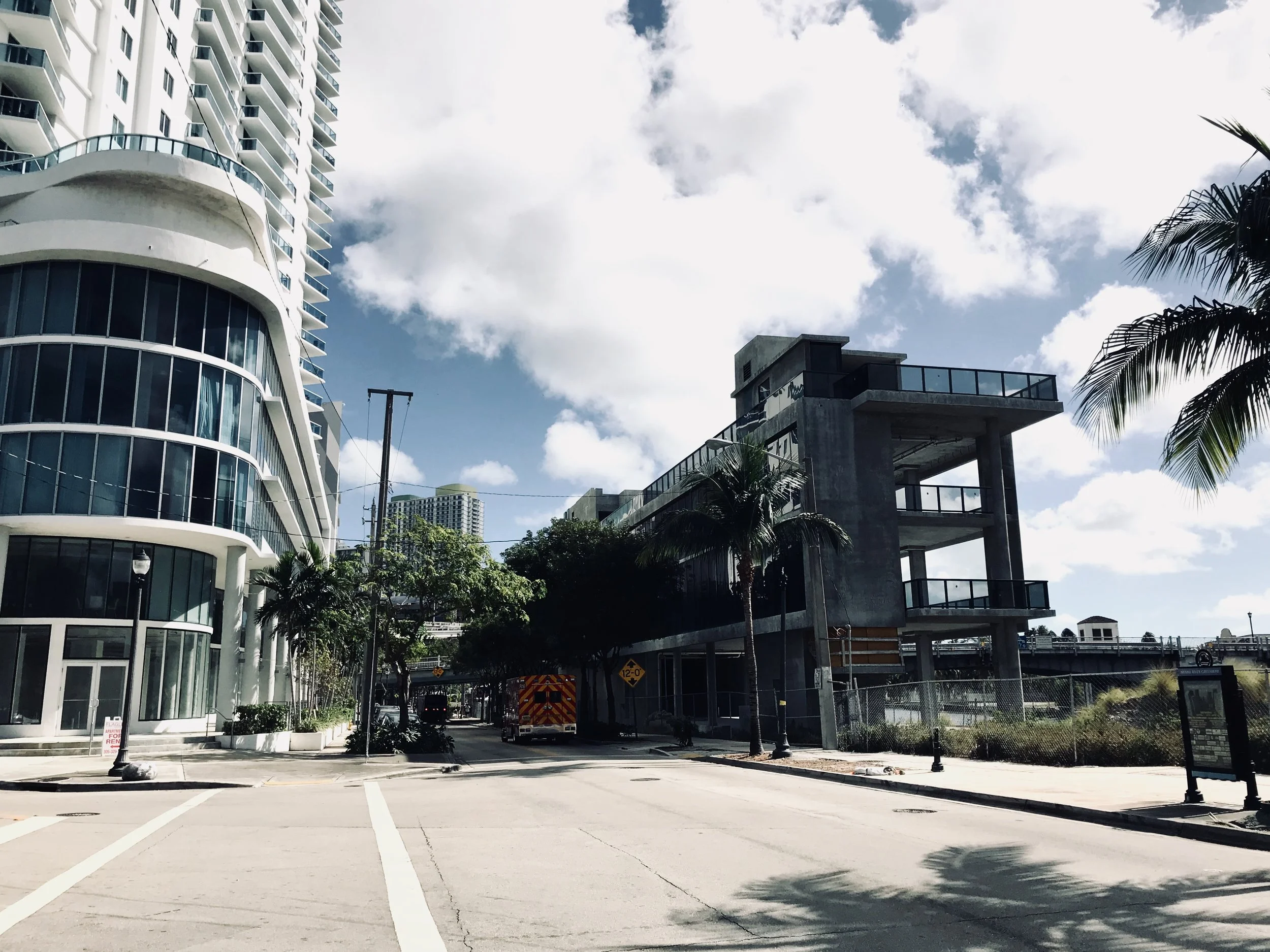
Flagler on the River | 340 W FLAGLER ST
I read all of it, but every so often curiosity gets the better of me. I'm not an urban planner, and I'm certainly not a zoning attorney. Miami 21 still intimidates me. There are sections I have to read more than once, and plenty of moments when I realize I don't fully understand what I'm looking at. Instead of moving on, I keep digging.
This happens to me all the time. I'll start researching a building convinced I'm looking for one answer. Somewhere along the way, the question changes. One deed leads to a permit. The permit leads to a zoning map. Before I know it, I'm trying to understand not just the building, but the decisions that made it possible. Sometimes my assumptions are confirmed. Sometimes they're completely wrong. I actually enjoy that part because it reminds me that the facts are usually more interesting than the story I had already started writing in my head.
Flagler on the River was one of those buildings. Completed in June 2014, the 32 story tower sits where Downtown, Overtown, and the Miami River intersect. On paper, it's a straightforward project with 250 rental apartments, ground floor retail, and just over half a million square feet of construction. It's the kind of building most people drive past without thinking twice.
The public record tells a different story. Melo acquired the 1.11 acre site in April 2012 for $4.5 million. Eight months later, plans were submitted to the City. What followed were months of comments, revisions, resubmittals, and approvals before the project received its initial approval in September 2013. By June 2014, the building was complete.
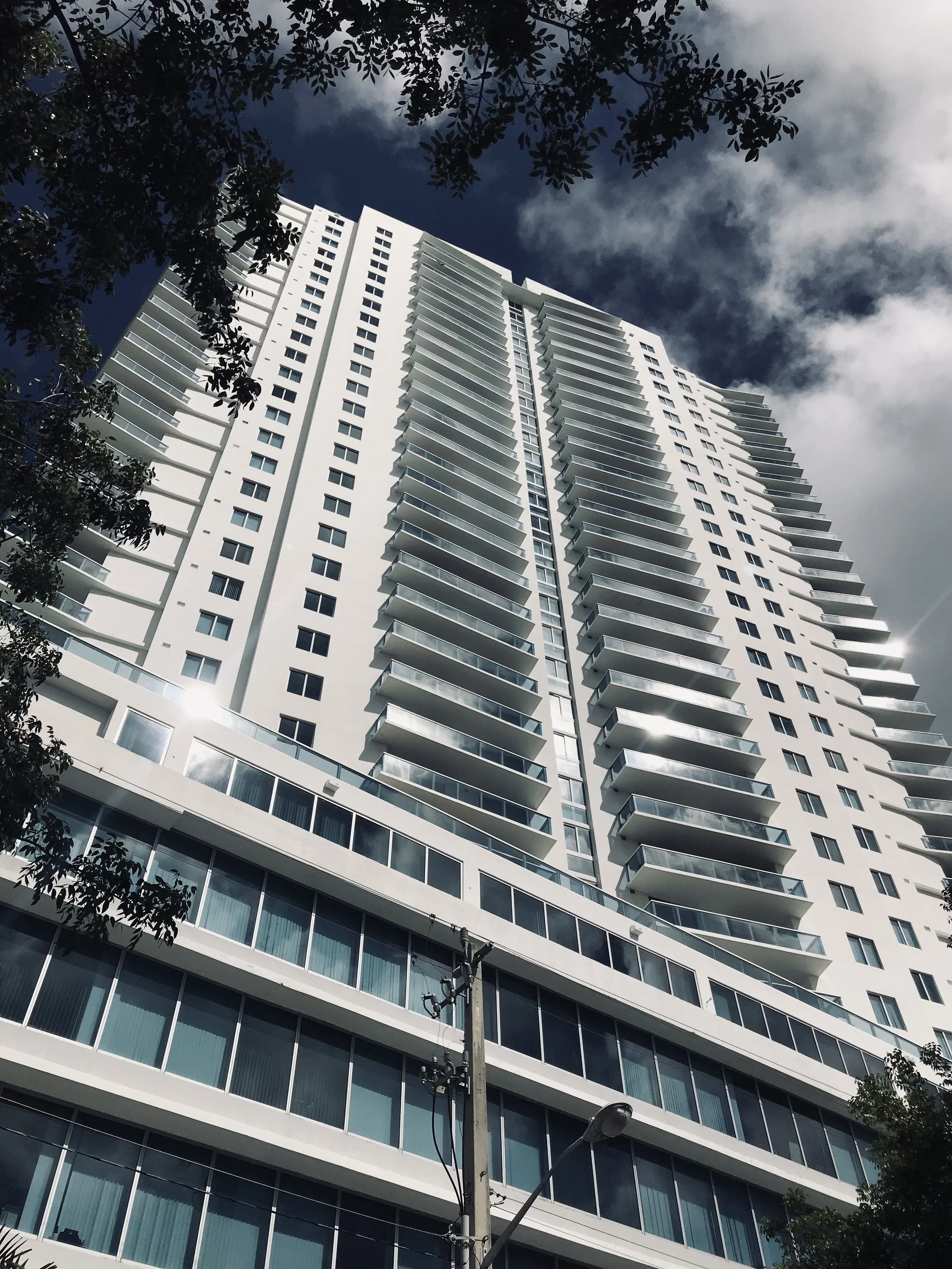
Flagler on the River | 340 W FLAGLER ST | Date 2018
Reading through the permit history, I realized the building already existed long before the first crane arrived. One detail caught my attention. The original submission included 160 sheets of construction drawings covering everything from floor plans and structural engineering to mechanical systems, life safety, electrical, and plumbing. Hundreds of decisions had already been made, debated, revised, and approved before most of us even knew a building was coming.
The permit also answered a question I hadn't thought to ask. Flagler on the River wasn't submitted as an affordable housing project. That may sound like a technical distinction, but it says something about the original business model. From the beginning, it was conceived as a market rate rental building. That decision shaped everything that followed.
The zoning proved just as revealing. The parcel sits within Miami's Urban Core district and inside a Transit Oriented Development area, a short walk from Government Center. Once I understood that, the tower stopped feeling accidental. The City had already identified this part of Miami as a place where density belonged. Melo wasn't asking permission to introduce a new idea. They were building within a planning framework that had already imagined a denser, more connected urban core.
One thing I've learned is that public records have no interest in selling you a building. A brochure tells you what the developer wants you to notice. A permit tells you what the City needed answered before construction could begin. A deed tells you what someone was willing to pay for the land. A zoning map tells you what was possible before anyone drew the first floor plan. None of those documents tells the whole story, but together they usually tell a more honest one.
Looking back, I don't know if Flagler on the River will ever be remembered as one of Downtown Miami's defining buildings, and I don't think that's really the point. What interested me wasn't whether the building deserved more attention. It was how an otherwise ordinary rental project could reveal so much about the decisions behind it.
The land was acquired before the western edge of Downtown became an obvious bet. The approvals moved through the City before Brightline, before Miami Worldcenter, and before much of the investment that now surrounds it. Looking through the public record, the project feels less like an isolated building and more like one piece of a much larger shift that was already underway.
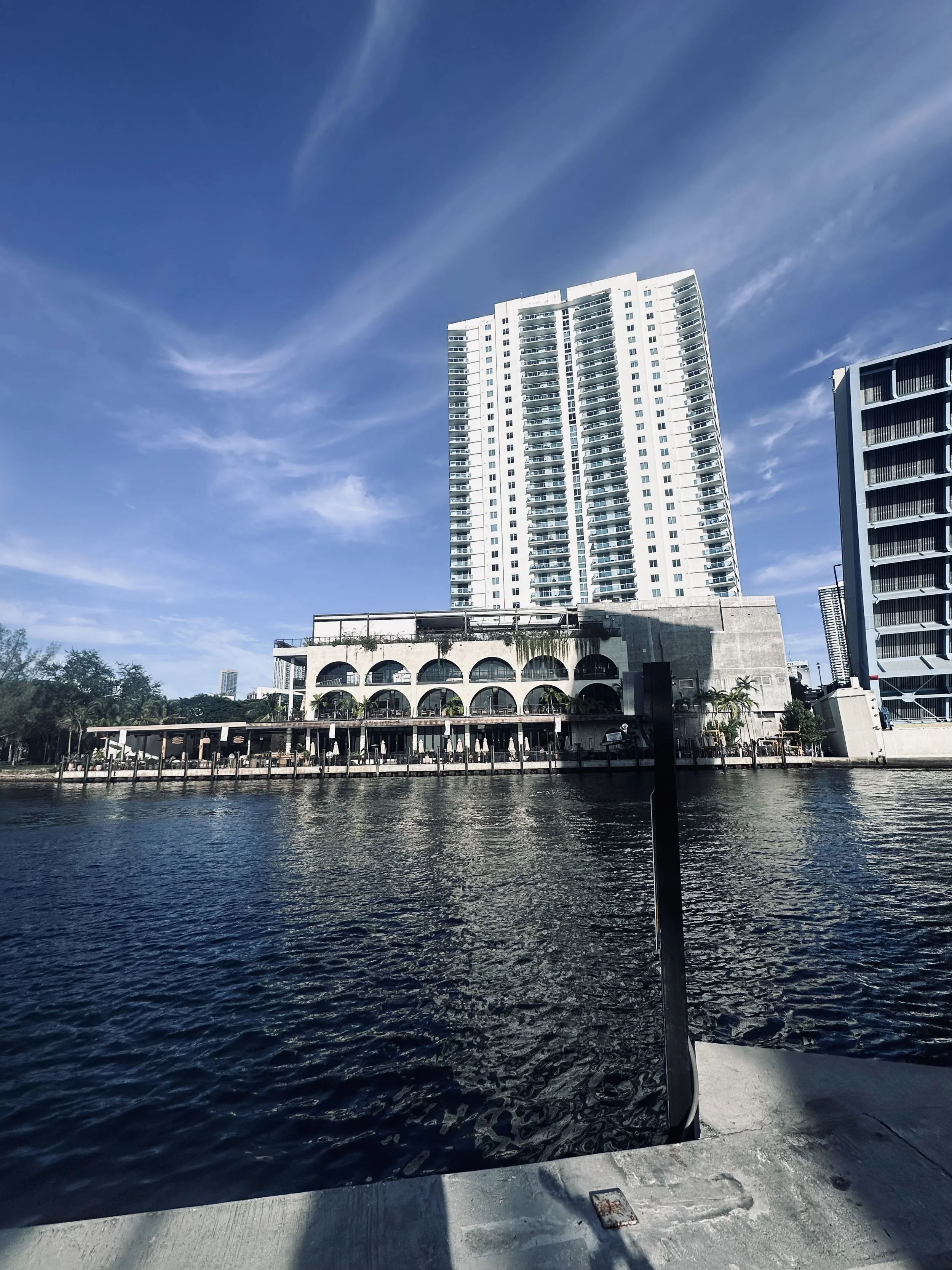
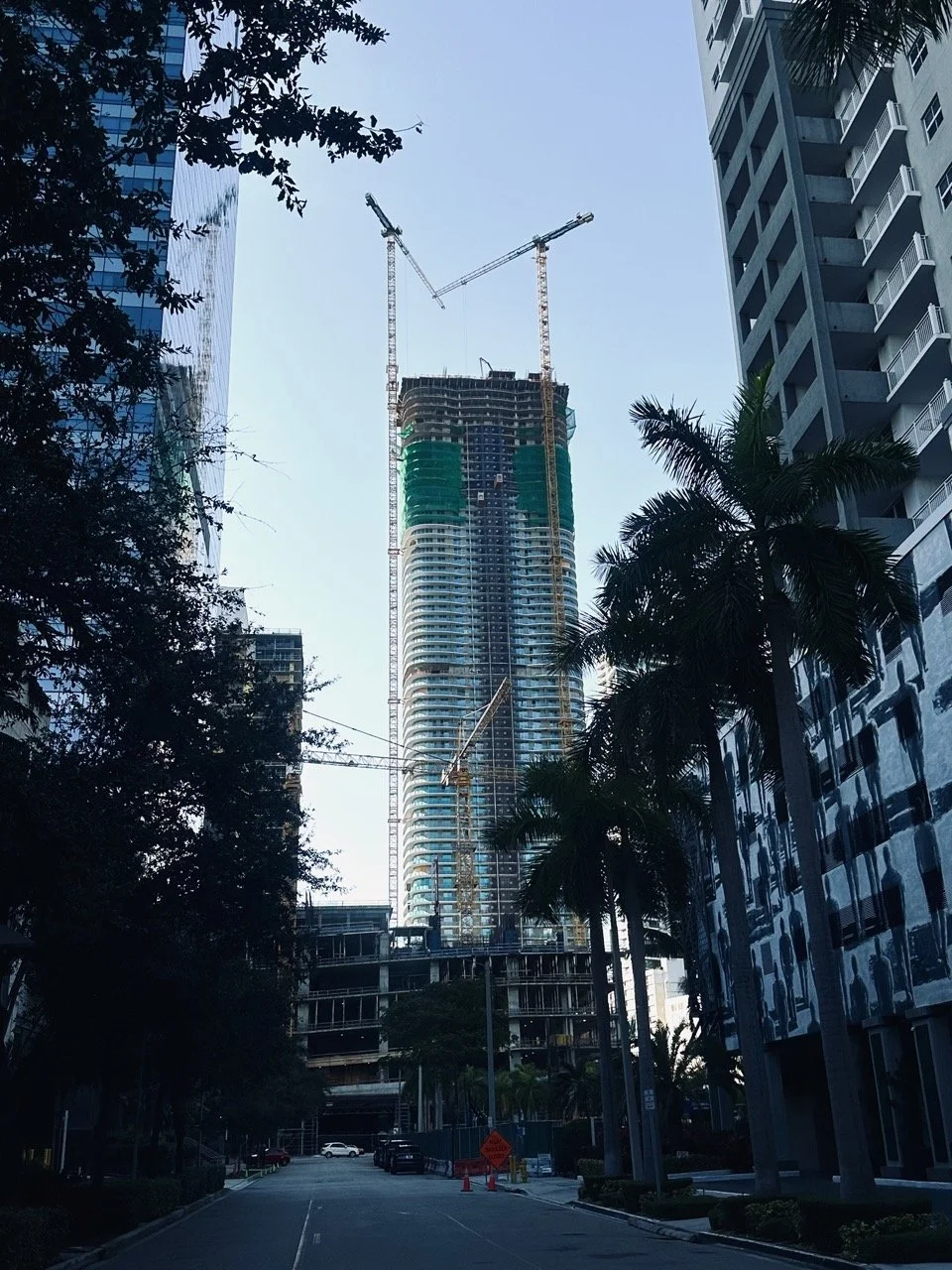
Flagler on the River | 340 W FLAGLER ST | Date 2025 | photo by Nadia Bouzid
The research didn't make me appreciate the building more. It made me appreciate the river. I think we've spent years looking at the Miami River as the back of the city, when it has always been one of its front doors. It's still one of the places in Miami where working boats pass residential towers, where commerce and real estate occupy the same stretch of water. The river isn't just a view. It's part of the reason the city exists at all. The river has carried people, commerce, industry, and opportunity. It shaped where the city grew before anyone was talking about waterfront living or branded residences.
That's probably why I keep coming back to it. Not because every building along the river is remarkable, and certainly not because every development deserves to be celebrated. The river itself is what interests me. It has always been one of Miami's working landscapes, and I suspect its next chapter will be just as important as its first. If researching Flagler on the River reminded me of anything, it's that some of the most interesting stories in real estate aren't found in the finished building. They're found in the paper trail that quietly explains how it got there.
Originally published in 2018. Updated July 9, 2026.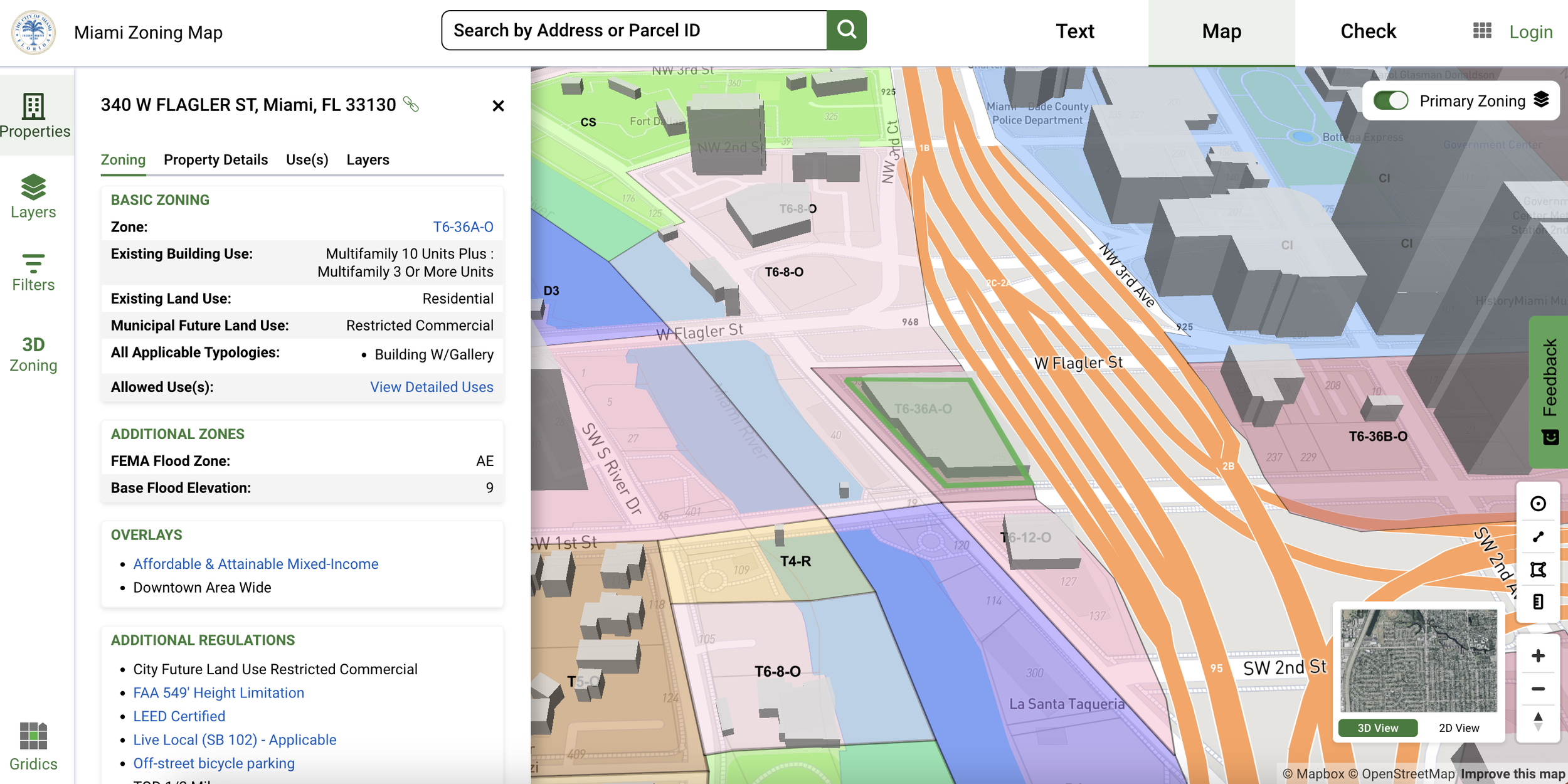
Looking Beyond the Building
When this article was first published in 2018, the western edge of Downtown was already changing, but much of what has happened since was still ahead. Looking at Flagler on the River today offers the advantage of hindsight.
Developed by the Melo Group, the project helped establish residential living along a stretch of the Miami River that had long been defined by warehouses, marine businesses, and industrial uses. Over the years, continued investment along the river, improvements to the Miami River Greenway, and new residential development have reinforced what projects like Flagler on the River suggested early on: the western edge of Downtown wasn't the edge for long.
Looking back also reinforces something else. Buildings rarely change neighborhoods on their own. They become part of much larger stories involving zoning, infrastructure, public policy, private investment, and timing. Flagler on the River is still an interesting building, but the paper trail surrounding it has become even more interesting with time. Sometimes the most valuable perspective comes not from looking at a building the day it opens, but from returning years later to see what happened around it.
RELATED POSTS


Official Resources:

Miami-Dade Property Appraiser (Ownership & Property Records)
https://www.miamidade.gov/pa/
Miami-Dade County Public Records
https://www2.miamidadeclerk.gov/officialrecords/
Miami-Dade County Property Search
https://www.miamidade.gov/Apps/PA/propertysearch/
Miami-Dade County GIS Maps
https://gisweb.miamidade.gov/
Miami 21 Zoning Code
https://www.miami21.org/
City of Miami Building Department
https://www.miamigov.com/Building
City of Miami ePlan / Permit Search
https://energov.miamigov.com/

Miami-Dade County Building Department
https://www.miamidade.gov/global/economy/building/home.page
Miami-Dade County Flood Maps
https://www.miamidade.gov/global/economy/building/flood-zone.page
FEMA Flood Map Service Center
https://msc.fema.gov/
Miami River Commission
https://miamirivercommission.org/
Miami Downtown Development Authority
https://www.miamidda.com/
The Underline
https://www.theunderline.org/
Most Miami condo terminations don’t start with a vote. They start quietly, with developers tracking ownership, reserves, and land value long before owners realize their building is in play.