Miami’s preservation vote brings the Foster + Partners tower at 619 Brickell closer to construction while keeping First Miami Presbyterian’s sanctuary protected.
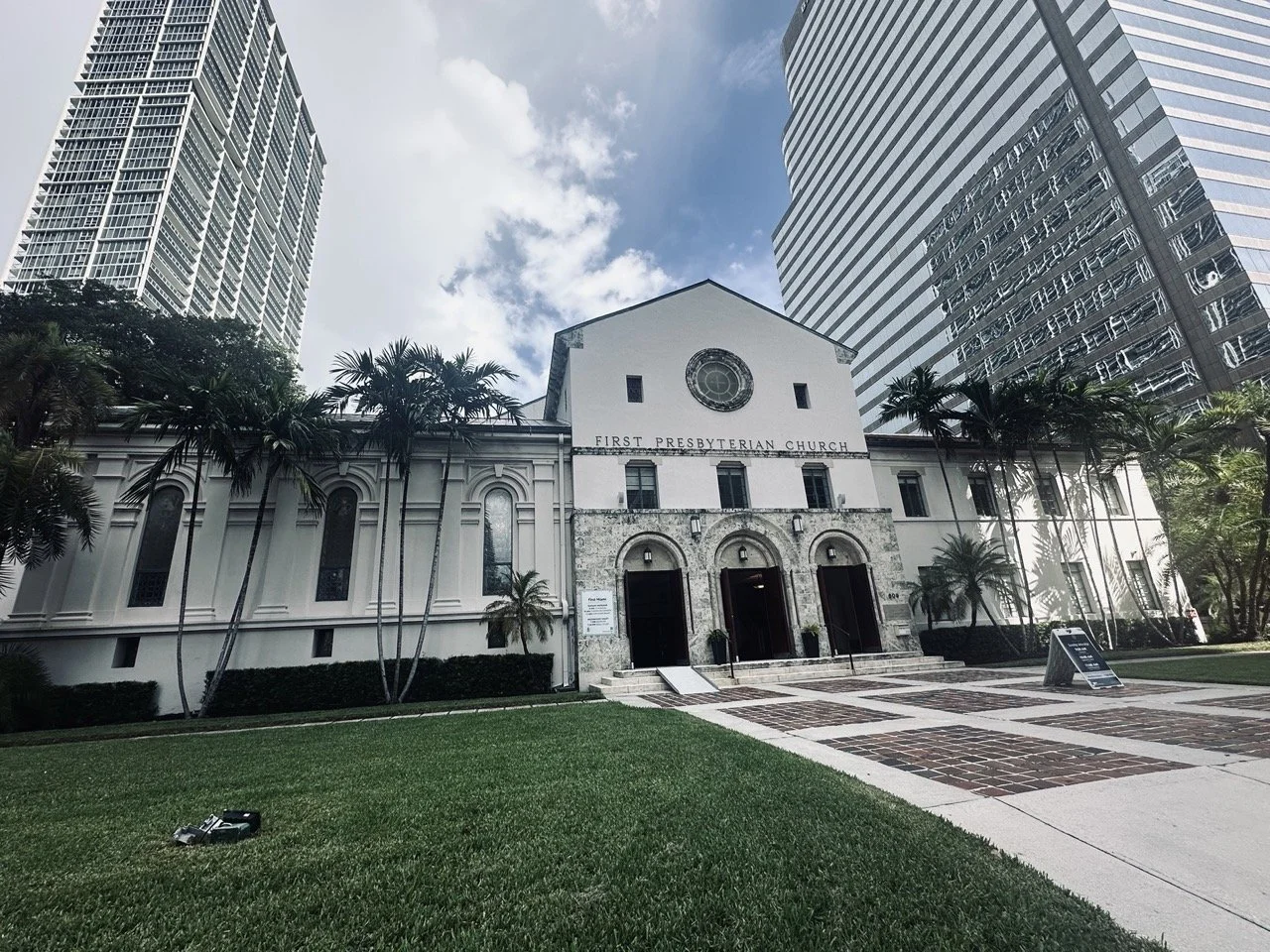
Front of the church
First Miami Presbyterian’s three arched entrances face Brickell Avenue. The sanctuary at 609 Brickell Avenue was completed in 1949.
First Miami Presbyterian faces Brickell Avenue with three arches and a copper roof. A driveway along the south side leads past the school annex to the waterfront parking lot. When Miami designated the property a historic site in 2003, the boundary followed the entire lot, from the avenue to Biscayne Bay. The sanctuary, the school and the parking lot were all inside it. Years later, when two developers proposed a condo tower behind the church, that boundary put a parking lot before the same preservation board that protected the sanctuary.
The congregation bought 609 Brickell Avenue with money from a lease on East Flagler Street. Henry Flagler had given First Miami the downtown lots and paid for the church that opened there in 1900. By the 1940s, the congregation needed more room. It leased the land at Flagler and Southeast Third Avenue to the Roper Corporation for 99 years and put the upfront payment toward the Brickell purchase. The downtown church came down in 1949. Roper built offices and shops on the old site, in what is now known as the Cortes Building.
Before the demolition, the congregation took out the stained glass, the oak benches and the carved balcony. They went into a small chapel in the north wing of the new church, built to resemble the one downtown and named for the man who had paid for it. Lester Geisler designed the larger sanctuary, completed in 1949, in the Mediterranean Revival style Miami had built so much of in the 1920s and 1930s. In its designation report, the city made much of how late the church was built in that style and of its connection to a congregation organized in 1896. The report singled out the sanctuary and chapel and recognized the specimen trees on the site. The school annex and parking lot fell inside the designation because they were on the same platted property.
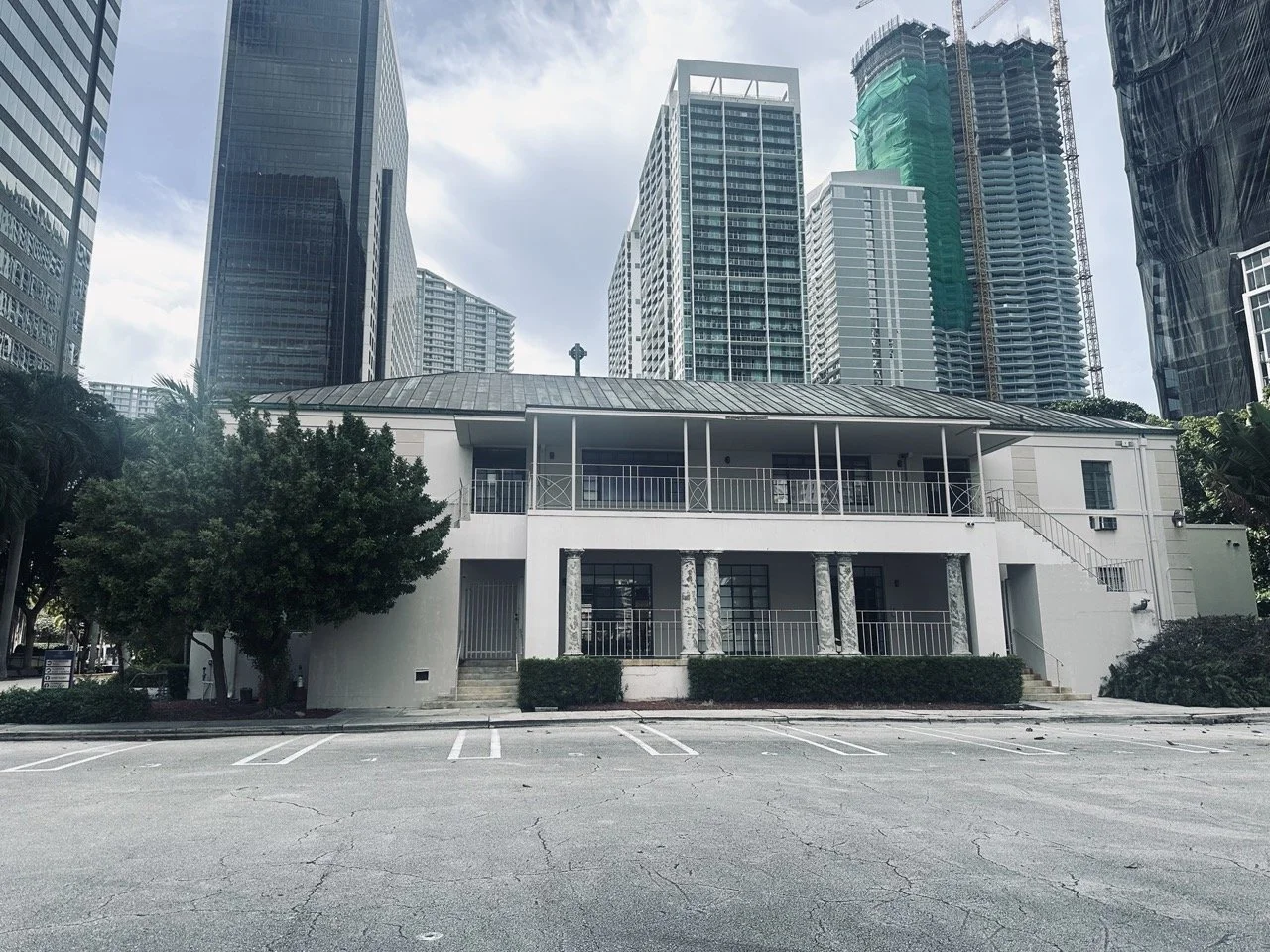
School annex
The former school annex behind the sanctuary, seen from the church’s parking lot.
The annex housed a school, and the church gave food truck operators space in the parking lot. Both uses came under scrutiny because the property tax exemption depended on how the land was used. The county property appraiser treated parts of the school operation and the food truck activity as commercial. The church argued that the outside companies at the school handled administration while the church remained in charge of religious instruction. The appraiser assessed back taxes for 2009 through 2017 on the portions the county considered taxable. According to the church’s complaint, the underlying taxes came to about $3 million. With interest and penalties, the lien recorded against the property in 2018 totaled about $6.5 million. A separate bill of roughly $510,000 covered 2018 itself.
The dispute reached beyond the tax bill. In 2019, the regional Presbyterian body appointed a commission that took over the role of the local church board, with authority to deal with the lien, ongoing taxes and the school. Church records show that leaders were weighing how to resolve the taxes and whether to sell part of the property. By the October 2021 vote, the reported lien balance had dropped to about $807,000 after Florida clarified the educational property tax exemption. The remaining amount was tied to the food trucks. The lien helps explain why a sale came under discussion. Whether the church needed to sell to pay the reduced balance is unclear. Pastor Christopher Benek described the proposal as a way to give the congregation new facilities and the means to continue its work in Brickell.
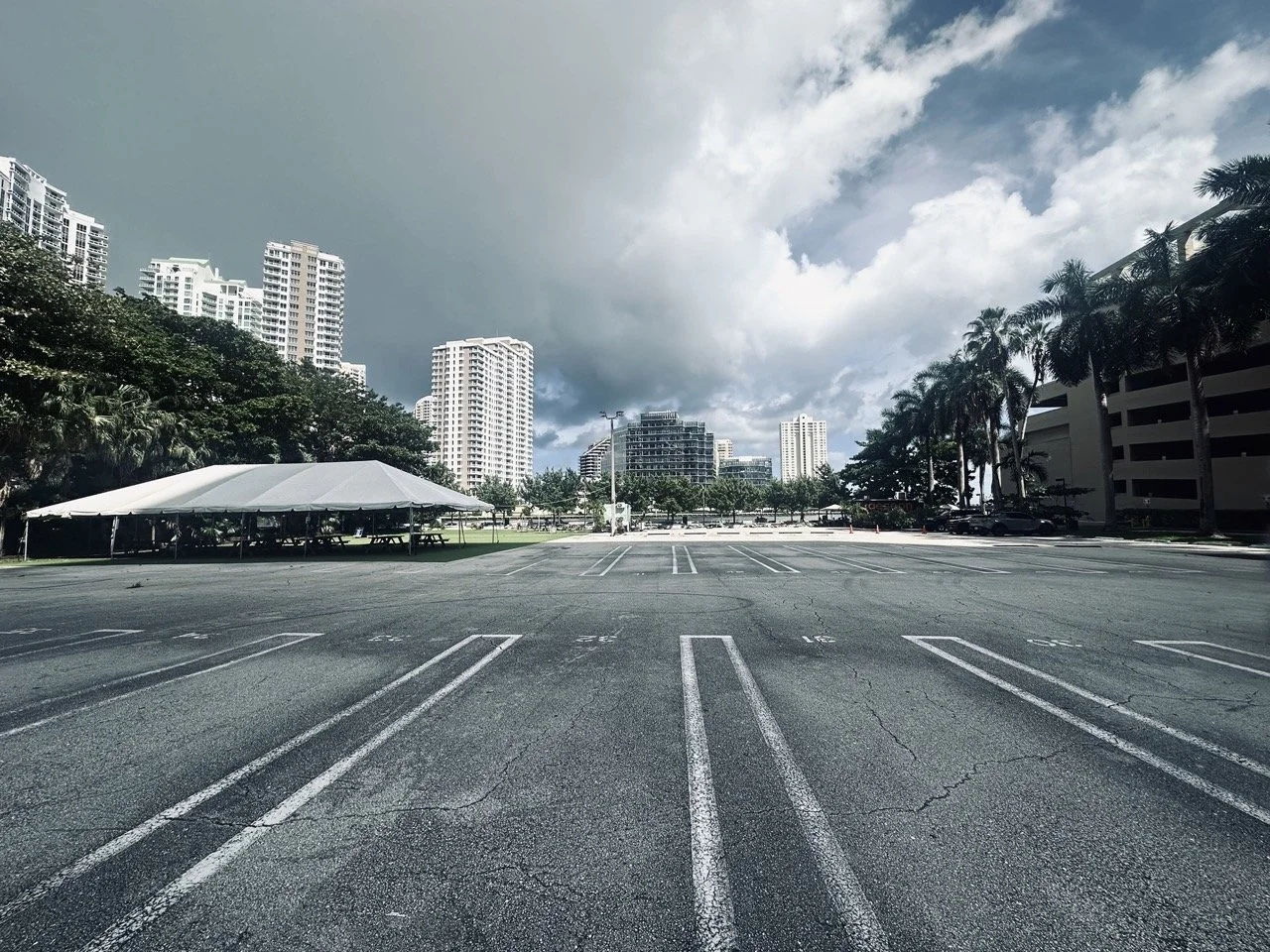
Parking lot
The waterfront parking lot at First Miami Presbyterian, part of the proposed site of 619 Brickell.
There was already a reason for a developer to look at that parking lot. The underlying Urban Core zoning allowed apartments alongside other uses, with a base limit of 48 stories and a route to as many as 80 through Miami’s public benefits provisions. The original proposal called for 80 stories. The plan later presented to the city’s design review board called for 75, with residences, commercial space and church facilities. The zoning could accommodate a tower of that scale. Demolishing the annex and building within the historic site still raised a separate preservation question.
The proposal put to church members in October 2021 would give 13th Floor Investments and Key International the land occupied by the school, fellowship hall and waterfront parking lot. The congregation would keep the sanctuary and receive new space in the development. The presentation put the cash payment at $48 million and estimated that a 15 percent share of future condo sales would bring in another $125 million. That implied roughly $833 million in apartment sales. The $240 million figure that stuck included those projected proceeds and space the developers still had to build. Put it in a table of Brickell land sales and you give the parking lot credit for apartments that existed only on paper.
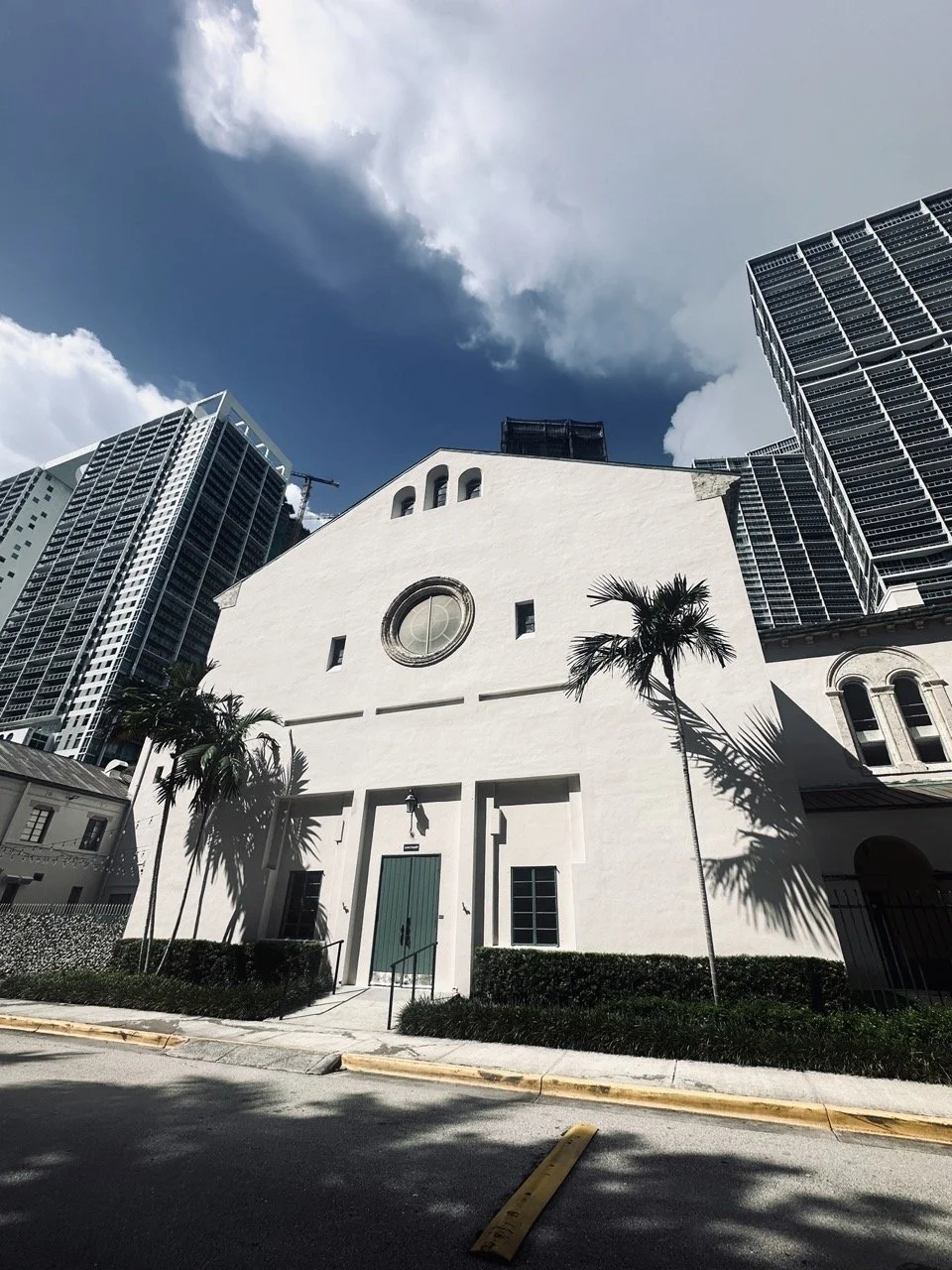
Side of the sanctuary
A circular window and three smaller arches above a side entrance to the sanctuary.
Church members voted in favor. A challenge within the denomination took until 2022 to resolve, and the parties recorded a summary of their agreement in 2023. That July, the church asked the city to remove the annex and parking lot from the historic designation. The condo association at IconBrickell Tower Two, about 160 feet away, had already registered a representative on the redevelopment the year before. It wanted to present evidence and question witnesses at the hearing. The preservation board denied that request and approved the boundary change in December 2024. The City Commission upheld the decision. In July 2026, a circuit court panel set both decisions aside because the association should have been allowed to take part.
On November 3, the preservation board heard IconBrickell’s argument that the annex and parking lot belonged to a church complex built in stages. It voted six to one to take both out of the designation, leaving a protected buffer around the sanctuary and retaining review over substantial changes to the tower’s exterior. The decision could still be appealed. Even so, the board had now voted in favor of the change after hearing the neighbor whose exclusion had undone the earlier approval.
If you’ve been holding off on signing a purchase contract at 619 Brickell because of the preservation dispute, the November 3 vote gives you a reason to take another look. The board heard IconBrickell’s objections and voted to remove the school annex and waterfront parking lot from the historic designation. The decision can still be appealed, but the project now has a favorable vote after the hearing the court required.
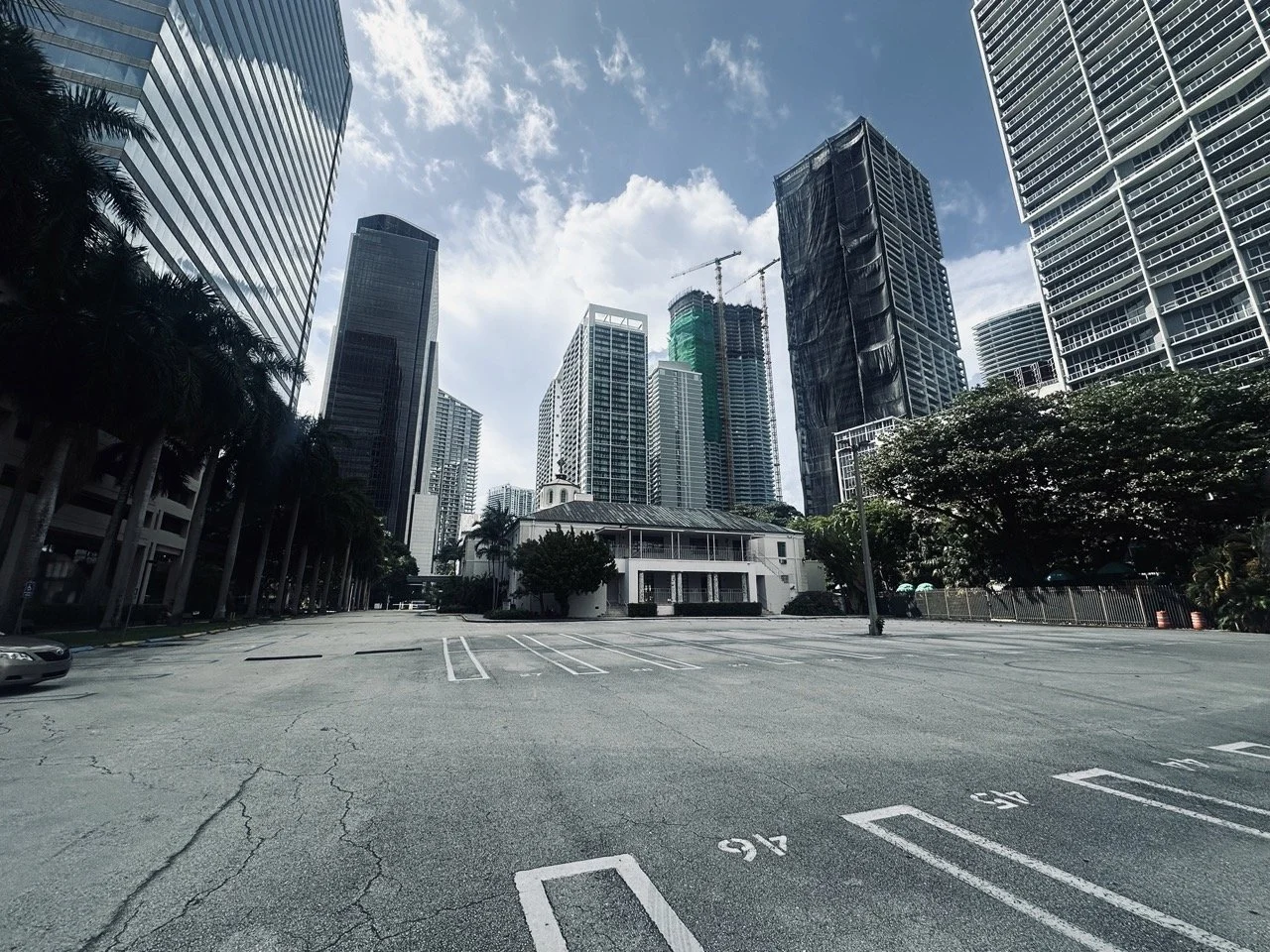
Wide view toward the annex
Looking back across the parking lot toward the former school annex. Miami’s preservation board voted to remove both from the historic designation while keeping the sanctuary protected.
MORE ON NEW CONSTRUCTION
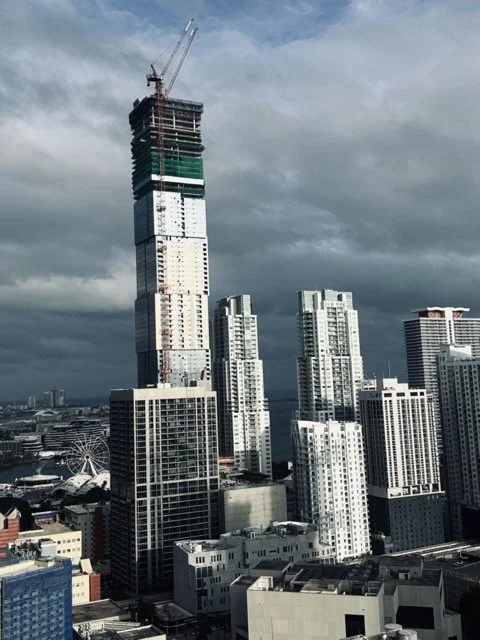
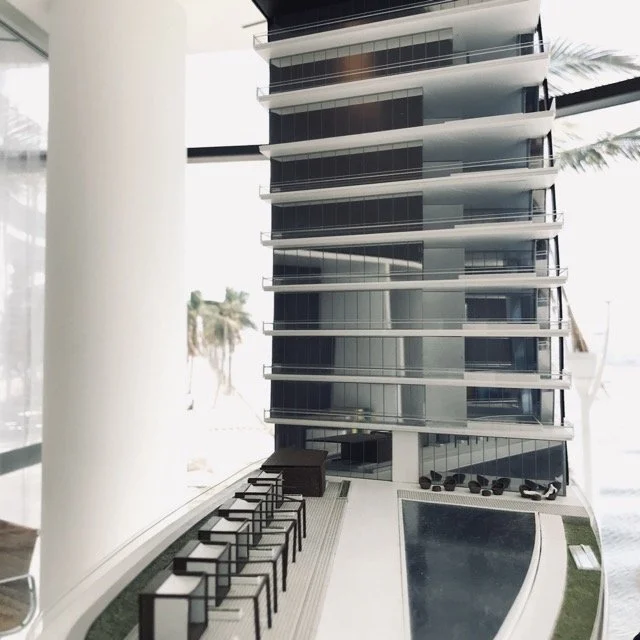


Miami’s preservation vote brings the Foster + Partners tower at 619 Brickell closer to construction while keeping First Miami Presbyterian’s sanctuary protected.