Why Downtown Miami Still Has Empty Storefronts
Downtown Miami doesn’t have a retail problem. It has a ground floor problem.
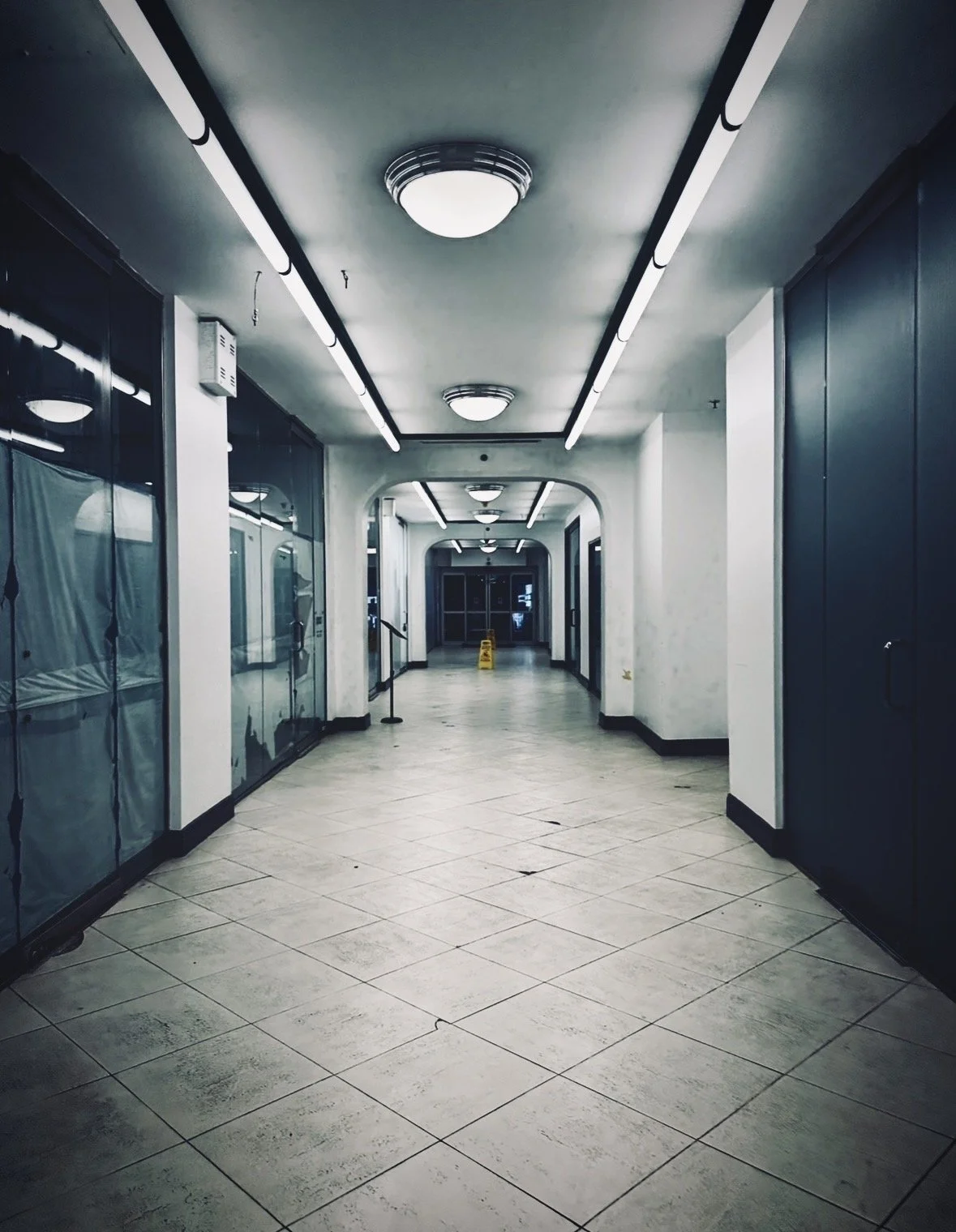
Downtown Miami has space. What it is still deciding is what belongs there.
The urban core is full of businesses. Dry cleaners every few blocks. Barber shops, nail salons, cafecito counters, fast food counters, CVS and Walgreens, banks, ATMs, late night pizza slices, smoke shops, the occasional yoga studio, dog groomers, and the luggage stores that quietly serve cruise passengers passing through. There are galleries that feel more like placeholders than cultural anchors. Wine shops that tried and disappeared. Food halls that arrived with optimism and closed quietly a few seasons later. The Diamond District is alive during the day while trading happens and the sidewalks fill with jewelers and couriers, then the street falls silent when evening arrives. Restaurants come and go, except for a few that somehow become institutions. Everything you would expect in a dense district is technically there, and yet the street still feels strangely unfinished.
Nothing is missing in the literal sense. The services exist. The density exists. Thousands of residents now live in towers nearby. Office workers pass through daily. Brightline pulls people in and out of the district every hour. And still the ground floor feels unsettled, as if the city is running an operating system that has not fully installed.
But the skyline is telling a different story. If you step back and look at the urban core today, you can already see it becoming denser. Tower cranes keep appearing. New residential buildings are rising. The skyline is not finished, not even close, but the direction is becoming clear. The city is building the vertical city first, while the question of what happens at street level remains open.
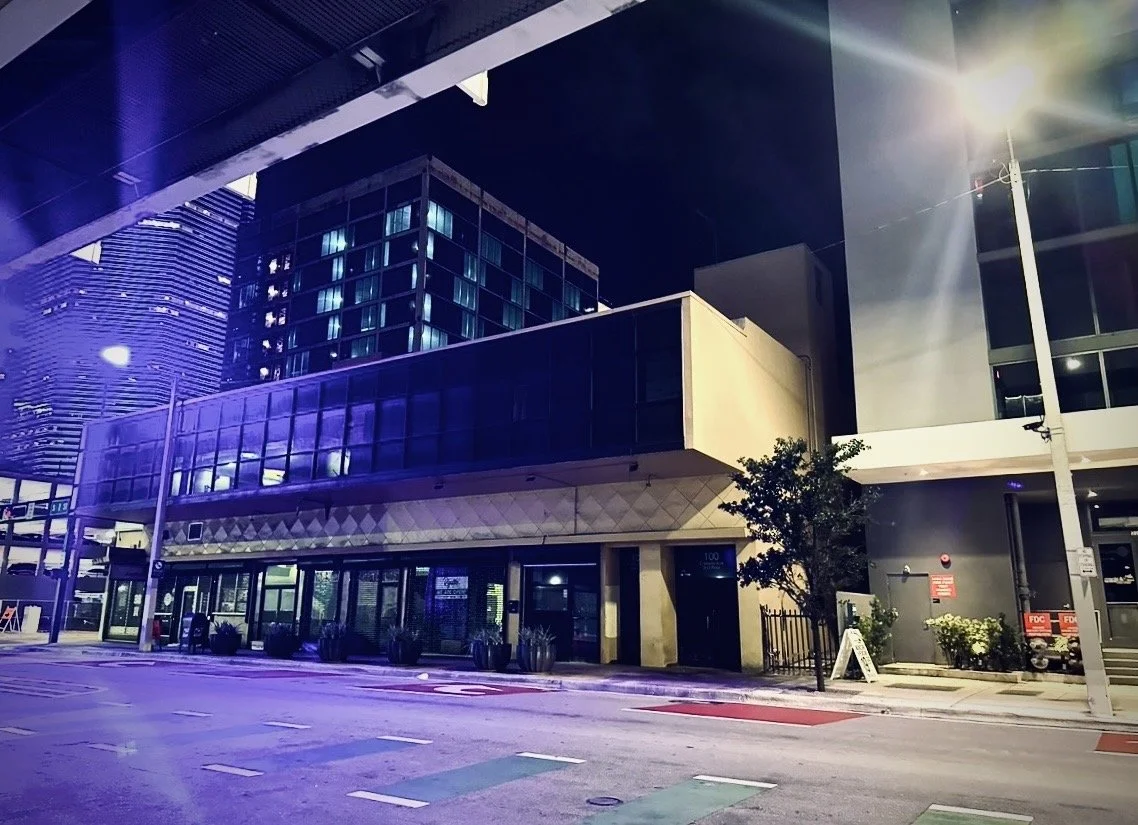
Street level reality does not always match the ambition of the skyline.
Part of the issue is that the economics of the ground floor have drifted away from the types of businesses that normally create neighborhood life. Retail margins have narrowed while rent expectations have climbed. Restaurants are often imagined as the natural answer for empty storefronts, yet in Miami the equation is far less forgiving.
Beyond the cost of rent, operators encounter a permitting environment that can stretch months or even years, and one detail in particular has become an unexpected barrier: the grease trap. Restaurants that cook anything beyond the simplest menu need grease traps large enough to meet Miami’s plumbing and environmental regulations. In older buildings those systems often do not exist, which means installation requires excavation, engineering approval, plumbing redesign, and coordination with the city. In dense areas the space to place the equipment may not even exist. Some buildings cannot physically accommodate the required capacity without major structural work. Even when installation is technically possible, the process can involve multiple layers of permitting and inspection before a kitchen can legally operate. By the time an operator navigates those steps, the initial investment has already expanded far beyond the original plan, and for many independent restaurateurs the risk becomes difficult to justify.
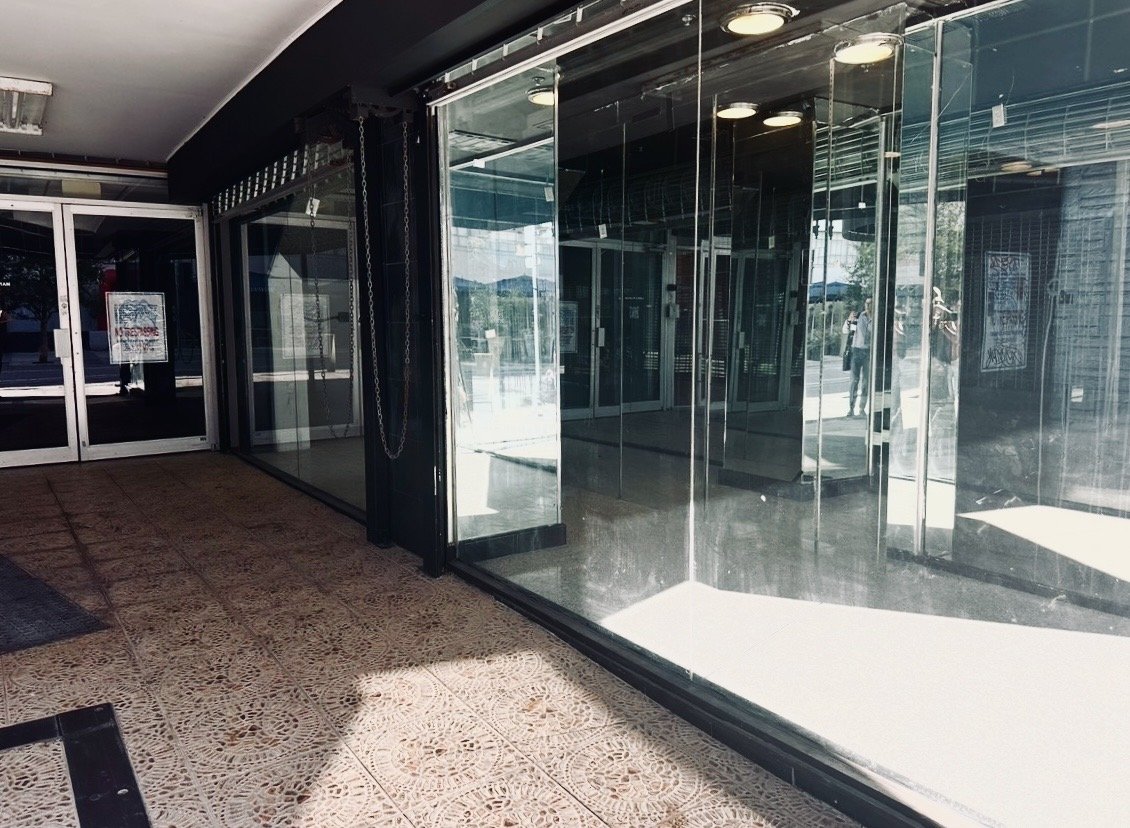
Empty glass retail storefront in downtown Miami
At the same time, many landlords are offering short leases because the long term expectation is redevelopment. When a building may eventually be sold or replaced with a tower, serious operators hesitate to invest heavily in buildouts that may not have time to pay themselves back. That uncertainty filters the tenant pool down to businesses that require almost no infrastructure. The result is a street economy dominated by uses that can appear quickly and disappear just as quickly.
Downtown once had its own ecosystem of everyday trade. Fabric stores, framing stores, photocopy centers, small specialty shops where people came to get something specific done. These businesses were part of a functioning ecosystem that gave people a reason to come downtown for something specific. Over time that layer disappeared. What replaced it were services that respond to immediate demand but rarely connect to one another. Each storefront survives independently rather than participating in a larger ecosystem. The street still functions, but it no longer tells a coherent story.
For now Downtown feels:
Too expensive for experimentation.
Too unstable for serious tenants.
Too valuable to abandon.
That is where Downtown Miami sits today.
Yet this moment may be less a failure than a transition. The skyline is still rising and cranes continue to reshape the horizon, each new residential tower adding more people who now wake up, walk their dogs, buy coffee, run errands, and live their daily lives within a few blocks of each other. The density that many cities spend decades trying to create is already forming. As that daily life deepens, the ground floor will eventually respond, not through a single grand concept but through the gradual appearance of businesses that begin to reinforce one another and give the district a clearer identity.
Downtown does not need to become another neighborhood trying to replicate a formula that worked somewhere else. It has the opportunity to develop its own character as the residential base grows and the street begins to adapt to the life happening above it. The skyline is already revealing the future of the city, but what remains far more interesting is what the street will decide to do with it.
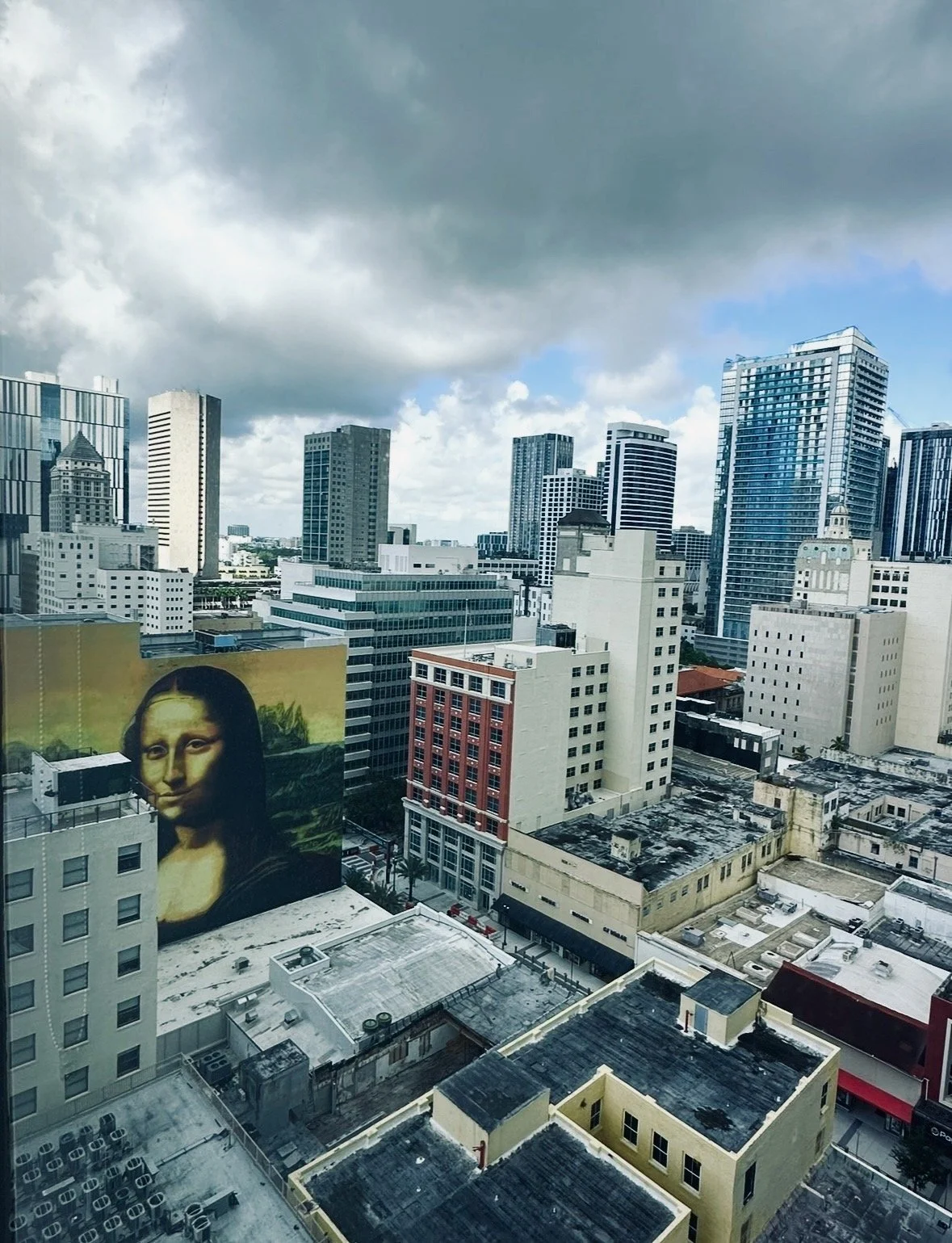
The skyline is already telling the next chapter of Downtown Miami
Murals on rooftops. Restaurants that became legends. A city center with space for bold ideas and lasting impact. Downtown Miami isn’t a blank slate, it’s a rare one. For those building with soul, the door’s still open.